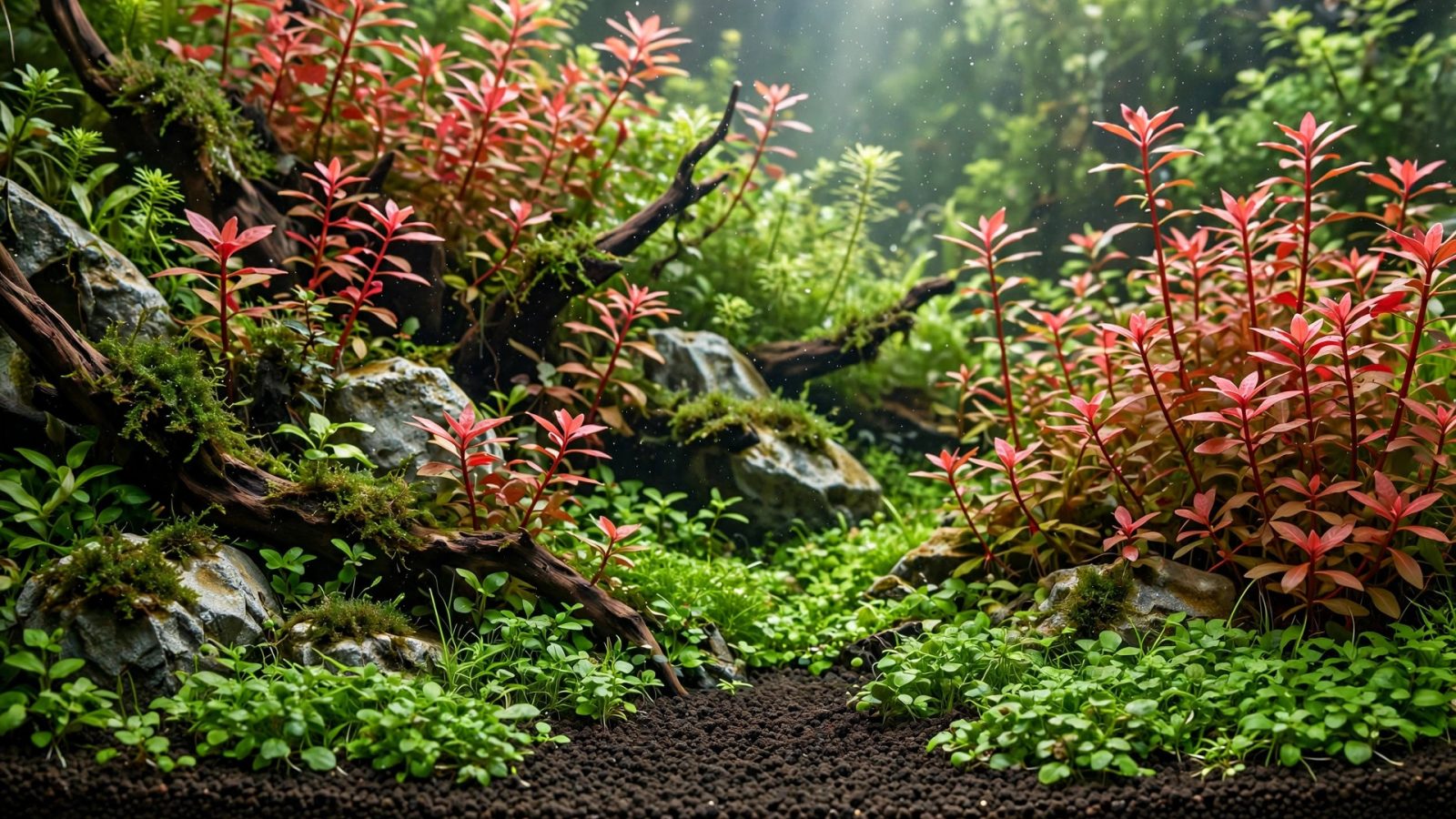
Not all aquasoils are created equal. The best aquasoil for planted tanks depends on your water, your livestock, and how much ammonia chaos you can tolerate in week one. Some brands blast your tank with ammonia for a month and grow plants explosively; others are gentle enough for shrimp from day one but feed plants less aggressively. Pick wrong and you’ll fight your substrate for months.
We’ve evaluated the major players — ADA Amazonia, Fluval Stratum, Tropica Aquarium Soil, UNS Controsoil, and the budget contenders — on nutrient content, ammonia leach, buffering strength, granule durability, and value. Here’s how they actually compare in real tanks.
What Makes a Good Aquasoil?
Before the brand rundown, here’s what you’re actually paying for:
- Nutrient charge: Bound nitrogen, phosphorus, potassium, and trace elements in the granules. Richer soil = stronger early growth but heavier ammonia leach.
- Ammonia leach profile: How much ammonia releases in the first weeks and for how long. This determines your cycling protocol and when livestock goes in.
- Buffering capacity: How strongly (and for how long) the soil pulls KH down and lowers pH. Strong buffering suits soft-water setups; it’s a liability for hard-water tanks.
- Granule durability: How long the baked granules hold their shape before crumbling to mud. This sets the substrate’s real lifespan.
- Consistency: Bag-to-bag uniformity. Premium brands are boring in the best way — every bag behaves the same.
1. ADA Aqua Soil Amazonia — The Benchmark
Best for: High-energy aquascapes, demanding plants, aquascapers chasing maximum growth.
Ammonia leach: Very high — 4–8+ ppm in week one is normal.
Buffering: Strongest in class; drives pH to ~6.0–6.5 and strips KH.
Amazonia is the original and still the reference standard. Nothing grows plants faster in the first six months — the nutrient charge is simply richer than anything else on the market. The tradeoff is the infamous ammonia spike: you must cycle fishless for 3–6 weeks with large water changes, and adding livestock early is asking for losses. It’s also the priciest option per liter and the granules break down faster than some competitors (expect 18–24 months of good structure in a high-energy tank).
Amazonia comes in Normal and Powder types, plus the newer Amazonia Ver. 2, which leaches less ammonia (still significant) at the cost of a slightly milder initial growth burst. For most hobbyists, Ver. 2 is the saner choice — you keep 90% of the performance with half the cycling drama. Our soil vs gravel comparison covers the broader decision if you’re still choosing a substrate type.
2. Tropica Aquarium Soil — The Balanced Performer
Best for: Community planted tanks, beginners stepping up to aquasoil, shrimp tanks.
Ammonia leach: Moderate — typically 1–3 ppm, clearing within 2–3 weeks.
Buffering: Moderate; settles pH around 6.5–7.0.
Tropica’s soil is the thinking hobbyist’s choice. It grows plants nearly as well as Amazonia in the first year but with a far gentler startup — many aquarists add hardy livestock after 1–2 weeks of water changes rather than a full month. The granules are notably durable, holding shape well past the two-year mark. Buffering is present but milder, making it safer for moderately hard tap water. If you want aquasoil results without aquasoil drama, start here.
3. UNS Controsoil — The Shrimp-Keeper’s Favorite
Best for: Caridina shrimp tanks, soft-water setups, aquascapers who want control.
Ammonia leach: Low–moderate; usually safe for livestock within 1–2 weeks.
Buffering: Strong and long-lasting; the go-to for bee shrimp parameters.
Controsoil was formulated with shrimp keepers in mind, and it shows: excellent long-term pH/KH buffering that holds soft-water parameters stable for a year or more, with modest ammonia release. Plant growth is solid rather than explosive — heavy root feeders may want supplemental root tabs after the first year. Available in fine, normal, and extra-fine grades. If your tank’s priority is livestock water parameters with plants as the beautiful supporting cast, this is your soil.
4. Fluval Stratum — The Accessible Entry Point
Best for: First aquasoil tank, betta and nano tanks, low-tech setups.
Ammonia leach: Low; often minimal cycling needed beyond normal.
Buffering: Mild; gentle pH reduction.
Fluval Stratum is the aquasoil you’ll find in every chain pet store, and there’s nothing wrong with that. It’s the gentlest true aquasoil — light on ammonia, light on buffering, light on price. The catch: it’s also light on nutrients compared to the premium brands, and the granules are the softest here, breaking down fastest (12–18 months in warm tanks). For a low-tech nano or a first planted tank, it’s a perfectly sensible choice. For a demanding high-light aquascape, you’ll outgrow it.
5. Budget Contenders: Landen, Mr. Aqua, and Generic Aquasoils
The last few years brought competent budget aquasoils — Landen Aqua Soil and similar brands offer perhaps 70–80% of premium performance at half the price. They’re less consistent bag-to-bag, the ammonia profiles vary, and long-term durability data is thinner, but for a budget aquascape they’re legitimate. Rinse nothing (never rinse aquasoil — you’ll destroy the granules and wash out nutrients), cycle properly, and they’ll grow plants well.
One warning: avoid no-name “aquarium plant soil” with no verifiable composition. Some are just baked clay with minimal nutrients — functionally expensive gravel. Stick to brands with a track record in the hobby.
Head-to-Head Comparison
- Maximum plant growth (year 1): ADA Amazonia > Tropica > Controsoil > Landen > Fluval Stratum
- Gentlest startup (livestock-safe fastest): Fluval Stratum > Controsoil > Tropica > Landen > ADA Amazonia
- Longest buffering: Controsoil > ADA Amazonia > Tropica > Fluval Stratum
- Granule durability: Tropica > Controsoil > ADA Amazonia > Landen > Fluval Stratum
- Value for money: Landen > Tropica > Controsoil > Fluval Stratum > ADA Amazonia
How Much Do You Need?
The rule of thumb: 1 liter of aquasoil per 10 liters of tank volume for a standard flat bed, plus 30% extra for slopes and mounds. A 20-gallon (75L) tank needs roughly 8–10 liters; a 10-gallon needs 4–5 liters. Aquasoil typically comes in 3L and 9L bags — for most tanks, one 9L bag handles a 20-gallon with enough left for contouring. Depth targets are covered in our substrate depth guide.
Cycling Protocol by Brand
High-ammonia soils (ADA Amazonia original): Fishless cycle 4–6 weeks. 50% water changes 2–3× per week for the first month. Don’t add livestock until ammonia and nitrite read zero for a full week. Plant heavily from day one — plants are your allies against the spike.
Medium soils (Tropica, Controsoil, Amazonia Ver. 2): 2–3 weeks of 50% weekly water changes, then test. Hardy livestock can often go in after ammonia clears, typically week 2–3.
Gentle soils (Fluval Stratum): Standard new-tank cycling applies. Test before adding livestock, but there’s no extended ammonia event to wait out.
Can You Mix Brands?
Yes — aquascapers do it routinely. Common combos: ADA Amazonia in the back where the heavy feeders are, Tropica or Controsoil in front for stability; or powder-type of one brand over normal-type of another for foreground detail. The soils intermingle at boundaries over time, which is harmless. What you shouldn’t do is layer different soils expecting them to stay stratified — they won’t.
The Bottom Line
For most planted-tank hobbyists, Tropica Aquarium Soil is the sweet spot: strong growth, manageable startup, durable granules, fair price. Choose ADA Amazonia when maximum plant performance justifies the cycling patience and premium price. Choose Controsoil for shrimp-focused soft-water tanks. Choose Fluval Stratum for your first aquasoil or a gentle low-tech setup. And whatever you buy, cycle it properly — the best aquasoil in the world still punishes impatience.
Deep Dive: What Each Soil Actually Does in Your Tank
ADA Amazonia — month by month
Week 1–2: ammonia 4–8 ppm, pH drops to ~6.0, water may tint slightly. This is normal — don’t “fix” it, water-change through it. Weeks 3–4: ammonia falls, nitrite spikes then clears. Heavy initial planting pays off enormously here; a densely planted Amazonia tank cycles visibly faster than a sparse one because plants directly consume ammonium. Months 2–6: the golden period. Growth is explosive — stem plants need weekly trimming, carpets fill aggressively. Months 6–18: the nutrient charge tapers; growth remains strong but you’ll notice heavy root feeders responding well to supplemental root tabs. Month 18+: granules soften, especially in high-flow zones. Plan your rescape or replacement around year two.
Tropica — the steady performer
Tropica’s curve is flatter: less drama upfront, slightly less explosive peak growth, but remarkable consistency through month 24. The granules’ durability is its standout trait — two-year-old Tropica beds still look and function like substrate, not mud. For aquarists who rescape annually or run tanks long-term without teardowns, this longevity is worth real money.
Controsoil — the buffer that keeps buffering
Where Controsoil earns its keep is parameter stability. In a caridina shrimp tank, holding pH 5.8–6.2 and KH 0–1 for 12+ months without intervention is exactly what you need, and Controsoil does it better than any competitor. Plant growth is good but not chart-topping — pair it with a solid water-column fertilization routine and you’ll have no complaints.
Aquasoil and Water Changes: The First Month Protocol
The single biggest mistake with new aquasoil is treating it like inert gravel — small water changes, normal schedule. Rich soils demand an aggressive first month:
- Days 1–14: 50% water change every 2–3 days. Yes, really. You’re exporting the ammonia and organic acids faster than they accumulate.
- Days 15–30: 50% twice weekly, testing ammonia/nitrite before each change.
- Month 2: 50% weekly, standard planted-tank maintenance thereafter.
- Throughout: run activated carbon or Purigen in the filter for the first month to polish the water and absorb organics.
Skipping this protocol is how new aquasoil tanks get the dreaded week-three algae bloom — thread algae and green dust feeding on the unchecked nutrient release. The water changes aren’t optional; they’re the price of admission for premium growth.
Powder vs Normal Type: When It Matters
Most brands offer two grain sizes. Normal type (3–5mm) is the workhorse — good for midground/background planting and general use. Powder type (1–2mm) exists for foregrounds: tiny carpeting plantlets like HC Cuba anchor dramatically better in fine grains, and the smooth texture looks more refined in nano tanks and Iwagumi layouts where the foreground is a focal point.
The pro move is combining them: normal type across the back two-thirds, powder type in the foreground. You use less of the (pricier per liter) powder, and each zone gets the grain size its plants need. Our depth guide covers how thick each zone should be.
Aquasoil in Low-Tech Tanks: Worth It?
Conventional wisdom says aquasoil is for high-tech CO₂ tanks, but that’s incomplete. In a low-tech setup without CO₂, aquasoil still delivers: easier planting, better root-feeder growth, and a nutrient reserve that forgives inconsistent fertilizing. The ammonia leach is actually less problematic in low-tech because lower light means less algae pressure during the startup phase.
The caveat is longevity: in low-tech tanks, aquasoil’s nutrients deplete slower (less plant uptake), so a single substrate bed can perform well for 3+ years. The value proposition is arguably better in low-tech — you pay once and coast. If you’re building a low-tech tank with crypts, swords, and vallisneria, aquasoil is a genuine upgrade over gravel, not just a high-tech luxury.
Storage, Shelf Life, and Buying Tips
- Unopened bags last years. Buy during sales without worry — the nutrients are stable in the dry granules.
- Never rinse aquasoil. Rinsing destroys granules and washes out the nutrient charge you’re paying for. Place a plate or plastic bag on the substrate when filling to avoid cratering it.
- Check manufacturing dates on premium soils if buying from slow-moving retailers; very old stock can have slightly reduced ammonia charge (not a real problem, just less of the initial punch).
- Buy 20–30% more than calculated. Slopes, mounds, and the inevitable spill demand headroom. Leftover sealed bags keep indefinitely.
Frequently Asked Questions
Can I use aquasoil with hard-water fish?
It’s a mismatch. Aquasoil actively fights your water chemistry, pulling pH and KH down while your livestock wants them up. You’ll burn through the soil’s buffering capacity fast and end up with unstable parameters — the worst of both worlds. Hard-water tanks belong on inert gravel or sand.
Will aquasoil harm my filter bacteria?
No — the ammonia leach actually feeds the nitrogen cycle, which is why aquasoil tanks cycle robustly. Just don’t add livestock until ammonia and nitrite read zero.
Can I recharge exhausted aquasoil instead of replacing it?
Partially. Heavy root-tab dosing restores nutrient availability for another 6–12 months, but it can’t fix granule breakdown — compacted, muddy old soil still restricts roots and traps detritus. Recharging buys time; it doesn’t reset the clock.
Is aquasoil safe for bottom-dwellers like corydoras?
Yes — the smooth, round granules are gentle on barbels, unlike sharp gravel. Corydoras sift aquasoil happily. The only caveat is very soft, crumbling old aquasoil can cloud when corys dig vigorously; healthy granules are fine.
Aquasoil vs Dirted Tanks: An Honest Note
No aquasoil roundup is complete without acknowledging the elephant in the room: mineralized topsoil capped with sand delivers comparable nutrition for under $15. Why pay $80 for aquasoil then? Three reasons: convenience (open bag, pour, done — versus weeks of soil preparation), cleanliness (rescaping in aquasoil is tidy; rescaping a dirted tank releases a mud plume), and predictability (every bag of a given brand behaves the same; DIY soil varies with your source material).
Dirt wins on pure value and arguably matches aquasoil for root-feeder growth. Aquasoil wins on ease, aesthetics, and replanting. Competitive aquascapers overwhelmingly choose aquasoil — not because dirt can’t grow plants, but because when you’re rescaping monthly, clean granules beat mud.
Regional Availability and What to Do Without It
Premium aquasoils aren’t equally available everywhere. In regions where ADA and Tropica are hard to find or marked up 2–3×, the rational choice shifts: a quality local or budget brand at fair price beats a premium brand at triple markup. The performance gap between mid-range and premium soils is real but modest — perhaps 15–20% in peak growth — while the price gap can be 200%. Don’t bankrupt your build chasing the last 15%.
Where no aquasoil is available at all, the classic fallback stack works: fine gravel or sand, diligent root tabs, and consistent liquid fertilization. Generations of aquarists grew beautiful tanks this way before aquasoil existed. The substrate helps; it was never the whole game.
Quick Recommendations by Tank Type
- High-tech aquascape (CO₂, strong light): ADA Amazonia (original for max growth, Ver. 2 for saner cycling) or Tropica.
- Community planted tank: Tropica Aquarium Soil — the best all-rounder.
- Caridina shrimp + plants: UNS Controsoil, no contest.
- First aquasoil / low-tech nano: Fluval Stratum or a budget brand.
- Tight budget, big tank: Budget aquasoil (Landen etc.) or go dirted — see mineralized topsoil.
- Hard-water livestock: Skip aquasoil entirely; use gravel or sand.
Match the soil to the tank you’re actually building — not the one in the contest photos — and any of these will serve you well.