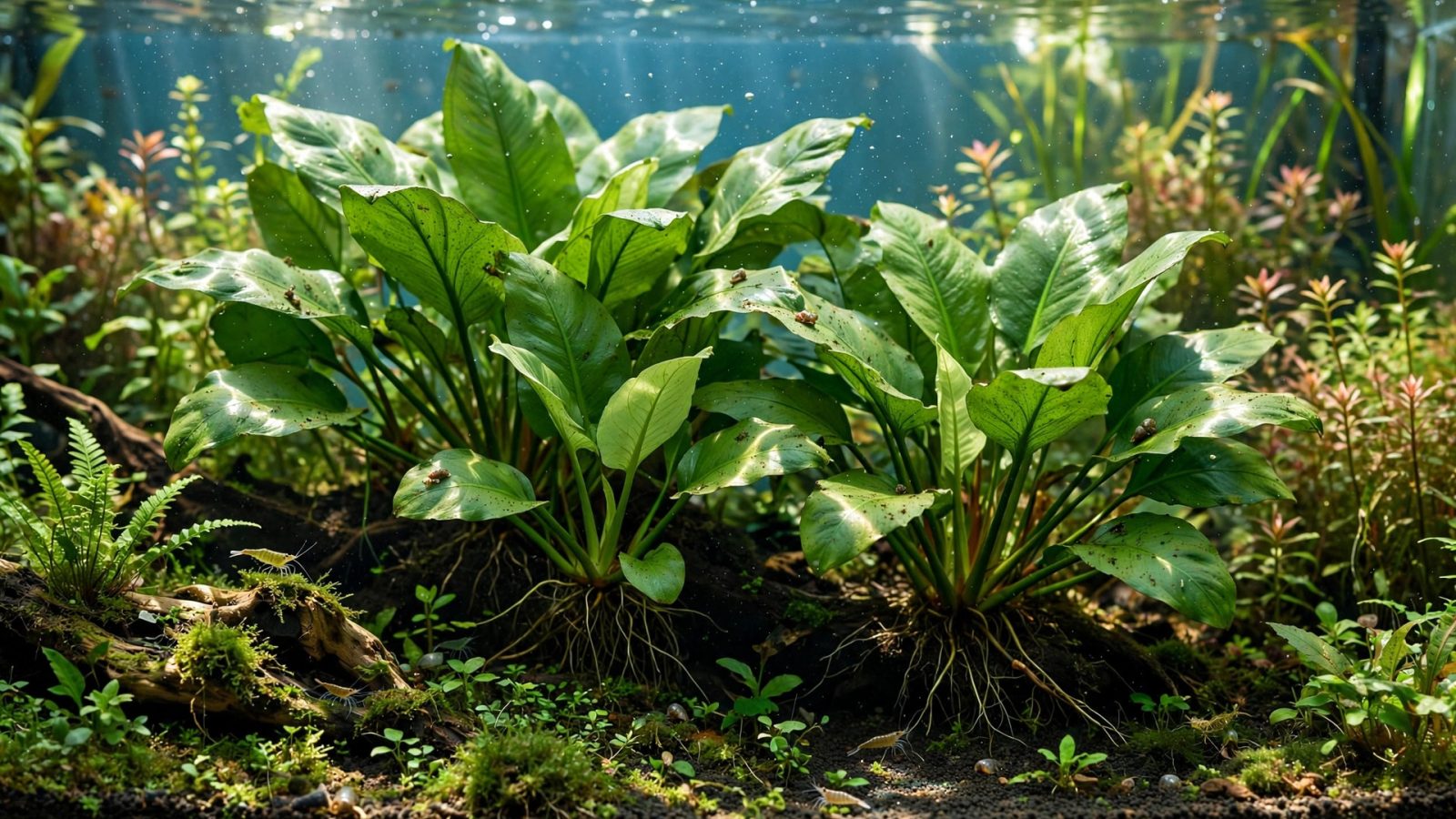
Your plants need food at their roots. Two philosophies deliver it: aquasoil, where the entire substrate is the fertilizer, or root tabs pushed into inert gravel or sand. Both grow beautiful plants. They differ enormously in cost, effort, and which situations favor each.
This guide compares root tabs vs aquasoil honestly — including the actual yearly cost math most comparisons skip — so you can choose based on your tank, not marketing.
How Each Method Works
Aquasoil is a manufactured baked-soil substrate loaded with bound nitrogen, phosphorus, potassium, and trace elements. Nutrients release slowly from every granule throughout the bed, feeding roots wherever they grow. It also buffers water chemistry (lowering pH/KH). Lifespan: 18–36 months before granules break down and nutrients deplete.
Root tabs are compressed fertilizer pellets/tablets you push deep into inert substrate (gravel, sand) near plant roots. They dissolve over 2–3 months, creating nutrient-rich zones. The substrate itself stays inert — you’re creating fertile pockets, not a fertile bed. Brands include Seachem Flourish Tabs, API Root Tabs, and various Osmocote-based DIY options.
Growth Results: Is There a Real Difference?
For heavy root feeders (Amazon swords, cryptocorynes, vallisneria, lotus): fresh aquasoil grows them faster and larger than root tabs in gravel — the difference is visible within weeks. The whole-bed fertility means roots find food everywhere, not just near last quarter’s tab placement. A sword in new Amazonia vs. one in gravel with tabs isn’t close in year one.
For stems and epiphytes: minimal difference. These feed substantially from the water column, so substrate fertility matters less. A stem tank on gravel + tabs + good liquid dosing looks essentially identical to one on aquasoil.
For carpets: aquasoil wins clearly. Tabs create patchy fertility — lush where tabs are, sparse between them — while aquasoil’s uniform bed gives even carpet fill. You can carpet on tabs (grid pattern, diligent replacement), but it’s more work for a worse result.
The gap narrows over time: as aquasoil depletes (year 2+), a gravel bed with fresh tabs can actually outperform exhausted aquasoil. Many experienced aquarists run aquasoil plus tabs from year one — belt and suspenders.
Cost Math: The Three-Year Picture
For a 20-gallon (75L) tank:
- Aquasoil: 2 bags at $40 = $80 upfront. Replacement around year 2.5 = another $80. 3-year total: ~$160.
- Gravel + tabs: Gravel $12 (one-time, lasts indefinitely) + tabs $15–20/year = $45–60 over 3 years. 3-year total: ~$60–75.
Root tabs win on cost decisively — less than half the price over three years. The gap widens further on large tanks: a 75-gallon needs $200+ in aquasoil versus $15 in gravel plus $25/year in tabs.
But cost isn’t only money — it’s also effort. Aquasoil is fire-and-forget for 18+ months. Tabs demand a recurring chore: remembering the schedule, pushing dozens of tabs deep into the substrate quarterly, tracking which zones were done when. Forget for six months and root feeders decline. Be honest about your maintenance personality.
Effort and Maintenance Compared
- Setup: Aquasoil — pour and go (but cycle 3–6 weeks for ammonia). Tabs — lay gravel, plant, insert initial tabs (no ammonia spike, faster stocking).
- Ongoing: Aquasoil — nothing for 18+ months. Tabs — replace every 2–3 months, 15–30 minutes per session.
- Rescaping: Aquasoil — clean, granules stay put. Tabs — uprooting near tabs releases fertilizer plumes; replant and siphon.
- End of life: Aquasoil — full teardown and replacement ($$$). Tabs — never; gravel is permanent.
- Water chemistry: Aquasoil — buffers pH/KH down (pro or con depending on livestock). Tabs — no chemistry effect.
Which Plants Need Which?
Aquasoil-favored: Carpeting plants, Amazon swords, tiger lotus, cryptocoryne colonies, red root feeders — anything where uniform bed fertility and easy planting matter.
Tab-sufficient: Anubias, Java fern, mosses (don’t care — they’re not in the substrate), most stem plants with water-column dosing, vallisneria (undemanding).
Either works well: Cryptocorynes (love aquasoil but thrive on tabs), bacopa, hygrophila, sagittaria.
The Hybrid: Aquasoil + Tabs
The pros don’t choose — they combine. Aquasoil for the base fertility, planting ease, and chemistry; root tabs from month 6–12 onward to extend peak performance and target heavy feeders. This is the standard practice in competition aquascaping: the soil does the broad work, tabs do the precision work. If you’re already on aquasoil, adding tabs isn’t an admission of failure — it’s optimization.
Conversely, tabs can rescue aging aquasoil: when granules start breaking down at year 2+, heavy tab dosing extends useful life 6–12 months, postponing the teardown.
Root Tab Types Compared
- Seachem Flourish Tabs: The standard — balanced micros with some macros, 3-month lifespan, widely available. Reliable and safe.
- API Root Tabs: Similar concept, slightly different formulation. Fine performer.
- Osmocote-based DIY: Gelatin capsules filled with Osmocote slow-release garden fertilizer. Extremely cheap, very effective — but use aquarium-appropriate Osmocote (no herbicides/pesticides) and don’t overdose; the concentrated prills can burn roots if placed too close. The budget king for large tanks.
- Specialty tabs: Iron-focused tabs for red plants, etc. Useful as supplements, not base nutrition.
Placement technique: Push tabs 5–7cm deep (use tweezers or a tab inserter), 10–15cm apart in planting zones, directly under or beside heavy feeders. Deeper is better — shallow tabs leach into the water column and feed algae. In sand beds, tabs stay put excellently; in coarse gravel, push extra deep.
Decision Framework
Choose aquasoil when: growing carpets or demanding root feeders; running CO₂ with high light; keeping soft-water livestock that benefit from buffering; building a competition or showcase aquascape; you prefer upfront cost over recurring chores. See our aquasoil brand comparison for which to buy.
Choose root tabs + inert substrate when: budget matters (especially large tanks); keeping hard-water livestock; you want a permanent substrate with no teardown cycle; your plant list is stems, epiphytes, and undemanding root feeders; you don’t mind a quarterly maintenance task. Our soil vs gravel guide covers the broader substrate decision.
Choose both when: you want maximum results and don’t mind the cost — aquasoil base with tab supplementation is simply the best-fed root zone achievable.
FAQ
Can root tabs cause algae?
Only if misused — tabs placed too shallow leach nutrients into the water column. Pushed deep (5cm+), they’re a non-issue. The algae problems people blame on tabs are usually light/CO₂ imbalances.
Are root tabs safe for shrimp and fish?
Quality aquarium tabs (Seachem, API) are safe when placed properly deep. The concern is only with DIY Osmocote overdosing or tabs dissolving exposed on the surface. Bury them well.
How do I know when tabs are exhausted?
Calendar, not symptoms — by the time plants show deficiency, you’ve lost weeks of growth. Set a recurring reminder: every 2 months for heavy feeders, every 3 for moderate zones.
Can I use tabs in aquasoil?
Absolutely — it’s the recommended hybrid approach, especially from the second year onward.
Nutrient Release Curves: What Actually Happens Underground
Understanding how each method releases nutrients explains their different behaviors. Aquasoil releases through ion exchange and slow diffusion from every granule simultaneously — the whole bed is a low, steady nutrient source from day one, gradually declining over 18–36 months. The release curve starts high (the initial charge, including the ammonia spike) and slopes gently downward.
Root tabs release through dissolution — each tab is a concentrated point source that creates a nutrient gradient: very rich within 3–5cm, fading with distance. Fresh tabs (month 1) release strongly; by month 3 they’re largely spent. The bed’s fertility is therefore pulsed and patchy — peaks after tab day, valleys before the next round, rich zones around tabs and lean zones between them.
This is why aquasoil grows more uniform results and tabs demand strategic placement. It’s also why the hybrid approach works so well: aquasoil provides the uniform baseline, tabs provide targeted boosts where the heaviest feeders sit.
Environmental and Practical Considerations
- Ammonia at startup: Aquasoil (especially ADA Amazonia) releases significant ammonia for weeks — you must cycle fishless. Tabs in inert substrate produce no ammonia spike; livestock can go in as soon as the tank cycles normally. For impatient beginners or instant aquascapes, this is a genuine advantage of tabs.
- pH buffering: Aquasoil actively lowers pH/KH — great for soft-water setups, problematic for hard-water livestock. Tabs are chemically neutral. If you keep livebearers, African cichlids, or hard-water snails, tabs avoid fighting your water chemistry.
- Shipping and storage: A year’s supply of tabs fits in a drawer and stores indefinitely. Aquasoil is bulky, heavy, and while unopened bags keep well, you’re storing 20 liters of substrate.
- Travel and consistency: Tabs suit the aquarist who travels — a housesitter can’t easily “forget” a quarterly tab the way… well, actually they can. Set phone reminders. Aquasoil suits the forgetful better: nothing to remember for 18 months.
Case Studies: Three Tanks, Three Choices
The 10-gallon betta tank (tabs win)
Small tank, a few crypts and anubias, one betta. Aquasoil would cost $25–30 and buffer pH down unnecessarily for a betta that prefers neutral water. Instead: $8 of pool-filter sand, $6 of tabs yearly. Plants thrive, chemistry stays betta-friendly, total 3-year substrate cost under $30. Our betta tank plant guide pairs well with this setup.
The 40-gallon high-tech aquascape (aquasoil wins)
CO₂ injection, strong light, HC Cuba carpet, red stems, contest ambitions. This tank exists to maximize plant performance — aquasoil’s uniform fertility, planting ease, and growth punch justify every penny. Add tabs from month 8 for the heavy feeders. Total cost is real ($100+), but so are the results.
The 75-gallon community tank (tabs win on value)
Swords, vallisneria, crypts, peaceful community fish. Aquasoil would cost $200+ and need replacing in a tank this size is a weekend-destroying teardown. Instead: $20 of gravel, $20/year in tabs, diligent quarterly schedule. The swords won’t know the difference if you don’t skip tab day.
Transitioning Between Methods
Tabs → aquasoil: Full substrate swap (teardown). Keep filter media wet, expect an ammonia leach from new soil, cycle 3–6 weeks. Your plants will thank you; your back won’t.
Aquasoil → tabs: Simpler — when the soil exhausts, switch to heavy tab dosing instead of replacing the substrate. The old aquasoil becomes inert-ish media with good CEC (it still holds nutrients from tabs well). Many aquarists run “exhausted aquasoil + tabs” indefinitely and report excellent results. The granules eventually turn to mud (year 3–4), at which point replacement is truly due — but you’ve bought years.
The Bottom Line
Aquasoil is the performance choice: better peak growth, easier planting, uniform results, higher cost, eventual teardown. Root tabs are the value choice: far cheaper, permanent substrate, no chemistry surprises, but patchier fertility and a recurring chore. The hybrid — aquasoil base with tab supplementation — is what serious aquascapers actually do, because it captures both methods’ strengths.
Choose based on your tank’s ambitions, your livestock’s water needs, your budget, and your honest assessment of whether you’ll remember tab day. Any of these paths grows beautiful plants in the hands of a consistent aquarist.