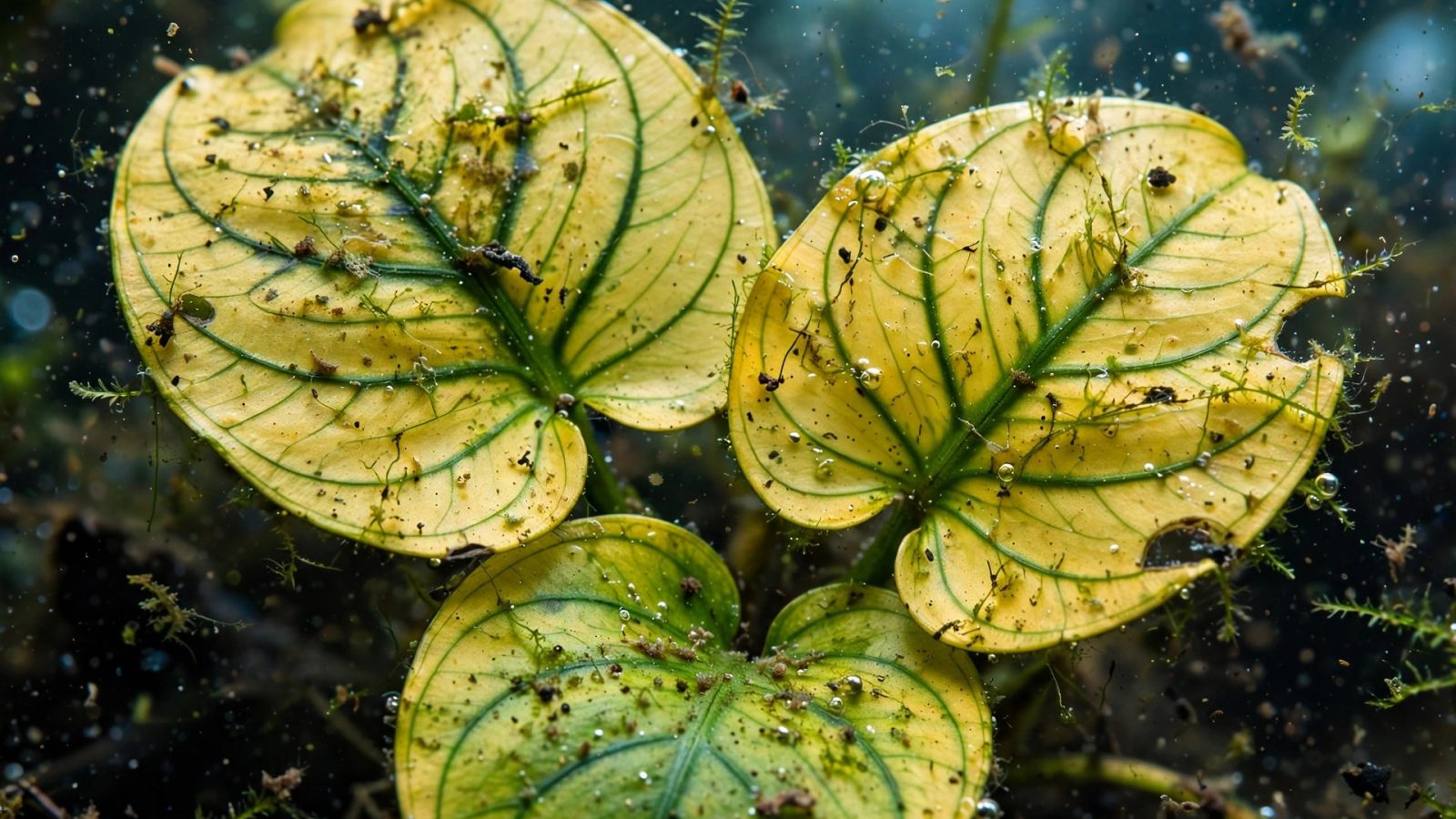
If your anubias leaves are turning yellow, the plant is telling you something — but not what. Yellow leaves are a symptom, not a diagnosis. Anubias are famously tough, low-light aquarium plants, yet they still react to nutrient shortages, bad planting, lighting stress, and simple old age. The good news is that anubias rarely dies outright; it just sulks until conditions improve.
This guide walks you through diagnosing the problem from the yellowing pattern itself — whether it starts on old leaves or new ones — and covers the nine most common causes with a concrete fix for each. Work through them in order, make one change at a time, and give the plant two to four weeks to respond before trying something else.
How to Diagnose Yellow Anubias Leaves
Before reaching for fertilizer or changing your lights, look closely at where the yellowing starts. Plants move some nutrients around and cannot move others, and that difference leaves a visible trail.
- Old leaves yellowing first (bottom/outer leaves): This points to a mobile nutrient deficiency — nitrogen, potassium, or magnesium. The plant steals these nutrients from old growth to feed new growth, so older leaves fade while new ones stay green.
- New leaves yellowing first (young leaves pale or with green veins): This points to an immobile nutrient deficiency — usually iron. The plant cannot move iron from old leaves, so new growth comes in pale.
- All leaves yellowing evenly, or spots and holes: Look beyond nutrients — lighting stress, algae, a buried rhizome, transplant melt, or old age are more likely.
- Only one or two of the very oldest leaves yellowing: That is usually normal aging. Anubias grows slowly and retires old leaves as it pushes new ones from the rhizome tip.
Also check your recent history: did you move the plant, change lights, stop dosing fertilizer, or plant it in the last few weeks? Those clues narrow things down fast.
9 Causes of Yellow Anubias Leaves (and How to Fix Each)
1. Nitrogen Deficiency
Nitrogen is the nutrient aquarium plants consume in the largest quantity. When it runs low, the plant pulls nitrogen from its oldest leaves first. You will see older leaves turning an even, pale yellow, starting at the leaf edges and working inward, while new leaves stay small and pale green. In a heavily stocked tank, fish waste usually supplies plenty of nitrogen — this problem mostly shows up in lightly stocked tanks with fast-growing tank mates competing for nutrients.
The fix: Start dosing a nitrogen source. A complete liquid fertilizer with a proper NPK ratio (nitrogen, phosphorus, potassium) is simplest for beginners — follow the bottle’s dosing instructions for your tank size and watch for improvement within two to three weeks. If you already dose, check whether your fertilizer is an all-in-one or a “micronutrient only” blend; the latter contains no nitrogen and is a common reason for this deficiency.
2. Potassium Deficiency
Potassium deficiency also strikes older leaves first, but it looks different from nitrogen. Instead of an even fade, you get yellowing at the leaf edges and tips first — the margins turn yellow while the tissue near the veins stays green a little longer. As it progresses, tiny holes (pinholes) appear in the older leaves, which is the classic potassium signature in aquarium plants.
The fix: Dose a complete fertilizer that includes potassium, or add potassium separately (potassium sulfate is the hobbyist standard). If you already dose a fertilizer but see pinholes, your current product may be under-dosed or lacking potassium entirely — check the label. Keep consistent weekly water changes going, since old tank water chemistry changes can mask dosing problems.
3. Iron Deficiency
Iron is immobile in plants, so the tell-tale sign is pale new leaves with dark green veins — a pattern called interveinal chlorosis. New growth comes in yellow-white while the veins remain green; older leaves stay normal. Iron deficiency is common in low-tech tanks where no fertilizer is dosed, because tap water and fish food supply almost no usable iron.
The fix: Dose chelated iron or a micro-nutrient fertilizer that includes iron, following the label dose. Iron is used up quickly by plants and broken down by light, so regular dosing matters more than occasional big doses. Note that anubias is a slow grower and will not show rapid green-up — give it a month before judging. If you want to keep things simple, one of the best things about anubias is that it thrives alongside other low-light aquarium plants for beginners, most of which share the same modest fertilizing needs.
4. Magnesium Deficiency
Magnesium sits at the center of the chlorophyll molecule, so a shortage shows up as a marbled or mottled yellowing: older leaves develop yellow patches between the veins while the veins themselves stay green, looking almost like a mosaic. It is easy to confuse with iron deficiency, but magnesium hits old leaves first because it is a mobile nutrient, while iron hits new leaves.
The fix: Magnesium deficiency often appears when water is very soft or when calcium levels are high relative to magnesium. A GH (general hardness) test helps: if GH is near zero, add a GH booster or dose magnesium sulfate (Epsom salt is the same compound) at roughly 1–2 ppm equivalent per week with water changes. Many complete fertilizers already include magnesium — again, check the label.
5. Too Much Light / Algae Stress
Anubias evolved to grow in shady streams and riverbanks, and it is one of the plants that dislikes intense light. Under strong lighting, the leaves can turn yellowish, pale, or translucent — essentially mild sunburn — and the slow-growing leaves become coated in green spot or hair algae, which further damages the leaf surface and blocks photosynthesis. If your anubias sits directly under a bright light with no shade, this is a prime suspect.
The fix: Move the anubias to a shaded spot — under driftwood, beneath taller plants, or in the shadow of your hardscape. You can also shorten your photoperiod to 6–8 hours or dim the light if your fixture allows it. Gently wipe algae off existing leaves with your fingers or a soft toothbrush; leaves that are badly coated usually will not recover and are best trimmed off so the plant invests energy in healthy new growth.
6. Buried Rhizome
The thick horizontal stem at the base of an anubias — the rhizome — must never be buried in substrate. When buried, the rhizome rots: it turns soft, brown, and mushy, and the leaves attached to the rotted section yellow and fall off. This is the most common beginner mistake with anubias, and it can kill the whole plant if left unchecked.
The fix: Pull the plant up immediately and inspect the rhizome. Trim away any soft, brown, mushy sections with clean scissors, keeping only firm, green, healthy rhizome (each kept piece needs a few leaves to survive). Then replant it the correct way: tie it to a rock or piece of driftwood with thread or fishing line, or wedge it into a crevice. The roots can dangle into the substrate or wrap around wood — only the rhizome must stay exposed above the substrate line.
7. New-Tank Transplant Melt
Anubias grown above water (emersed) at the nursery must grow entirely new underwater (submersed) leaves when you plant them in your tank. During this transition, the old emersed leaves often yellow, wilt, and melt away over the first few weeks. This is normal and not a sign of disease — the plant is sacrificing old leaves while it pushes new ones adapted to life underwater.
The fix: Be patient and leave the plant alone. Trim off leaves that have fully melted so rotting tissue does not foul the water, but keep any leaf that is still mostly green. Maintain stable water parameters and avoid moving the plant again while it settles in. New leaves should start appearing from the rhizome tip within a few weeks. This slow adaptation is one reason anubias is a favorite for growing plants without CO2 — it adapts to low-tech conditions better than most plants, even if the transition looks rough.
8. Natural Aging of Old Leaves
Sometimes a yellow leaf is just an old leaf. Anubias leaves can last a year or more, but they eventually age out: the oldest, outermost leaves on a mature plant yellow from the edges inward, wilt, and drop off while the rhizome tip keeps pushing fresh green leaves. If the yellowing is limited to one or two of the very oldest leaves and everything else looks healthy, this is simply the plant’s life cycle.
The fix: Trim the yellowing old leaf off at its base with clean scissors. Removing it keeps the plant looking tidy and redirects energy to new growth. No fertilizer change, lighting change, or treatment is needed — this is not a problem to solve.
9. Poor Water Flow / CO2 Imbalance
Anubias leaves are thick and slow-growing, and in dead spots of the tank they can collect a film of biofilm and debris that limits gas exchange. In low-tech tanks without CO2 injection, inconsistent CO2 levels — caused by overstocking swings, unstable pH, or poor circulation — can leave slow growers like anubias struggling while faster plants cope fine. The result is general yellowing, stunted new leaves, and leaves that never quite look healthy.
The fix: Improve circulation so a gentle current reaches the anubias without blasting it — reposition your filter outlet or add a small circulation pump. Keep your photoperiod consistent and your water change schedule steady, which stabilizes CO2 levels. You do not need CO2 injection for anubias, but a liquid carbon supplement or simply stable, clean water often clears up this kind of vague decline. For comparison, similar slow growers like the one in our Java fern care guide respond to the same circulation-first approach.
Quick Diagnosis Table
| Symptom pattern | Likely cause | Fix |
|---|---|---|
| Old leaves evenly pale yellow | Nitrogen deficiency | Dose an all-in-one fertilizer with nitrogen |
| Old leaves yellow at edges, then pinholes | Potassium deficiency | Dose fertilizer with potassium; check label |
| New leaves pale with green veins | Iron deficiency | Dose chelated iron or micro fertilizer |
| Old leaves mottled yellow between green veins | Magnesium deficiency | Raise GH; dose magnesium sulfate |
| Pale/translucent leaves under bright light, algae coating | Too much light / algae stress | Move to shade; shorten photoperiod; wipe algae |
| Leaves yellowing from base; soft brown rhizome | Buried rhizome | Trim rot; attach rhizome to rock or wood, not buried |
| Yellowing weeks after planting, new leaves emerging | Transplant melt | Trim melted leaves; wait for new submersed growth |
| Only the oldest one or two leaves yellowing | Natural aging | Trim the old leaves; no treatment needed |
| General yellowing, stunted new growth, debris on leaves | Poor flow / CO2 imbalance | Improve circulation; stabilize water changes and photoperiod |
How to Help Your Anubias Recover
Once you have identified the cause, recovery is mostly about trimming and patience. Cut off fully yellow or rotting leaves at their base with clean scissors — leaves that are more than half yellow almost never green up again, and removing them lets the plant direct its energy toward new growth. Do not strip the plant bare: keep any leaf that is still mostly green.
Then give it time. Anubias is one of the slowest-growing aquarium plants, producing a new leaf every couple of weeks under good conditions and even less often in low light. That means it can take a month or two before you see clear signs of recovery. Resist the urge to change three things at once — fix the most likely cause first, keep your routine stable, and evaluate after a few weeks. A firm green rhizome is the best sign your plant is still in the fight; as long as the rhizome is solid, anubias almost always bounces back.
Frequently Asked Questions
Can yellow anubias leaves turn green again?
Usually not. Once a leaf has yellowed significantly, the chlorophyll is gone and the leaf will not recover its color. The fix is to address the underlying cause so the new leaves grow in healthy and green, and trim away the spent leaves.
Should I remove yellow leaves from my anubias?
Yes — trim fully yellow, melting, or algae-covered leaves off at their base. This keeps the plant tidy, prevents rotting tissue from fouling the water, and redirects energy into new growth. Leave leaves that are still mostly green, since they still photosynthesize.
Do anubias need fertilizer to stay green?
Anubias is undemanding, but it is not immune to nutrient shortages. In a lightly stocked tank with no fertilizer, deficiencies in nitrogen, potassium, or iron will eventually show up as yellowing. A regular dose of a complete liquid fertilizer is usually enough to keep it green.
Can too much light turn anubias leaves yellow?
Yes. Anubias is a shade plant, and under intense light its leaves can turn pale or yellowish and become covered in algae. Moving it to a shaded spot and keeping the photoperiod to around 6–8 hours usually resolves it.
How long does it take for anubias to recover from yellowing?
Expect visible improvement in new growth within three to six weeks, since anubias grows slowly. Old yellow leaves will not recover, so judge progress by the color and health of the newest leaves coming from the rhizome tip.
Is a buried rhizome the same as melting?
No. Transplant melt affects the leaves and is temporary while the plant adapts to underwater growth. A buried rhizome rots the stem itself — it turns soft and brown — and will kill the plant if you do not lift it out, trim the rot, and attach it above the substrate.
Yellow anubias leaves are almost always a solvable problem. Diagnose from the yellowing pattern, fix the most likely cause, trim the dead weight, and give this famously patient plant the time it needs. A healthy anubias rewards you with deep green, algae-free leaves for years — it just asks for stability in return.