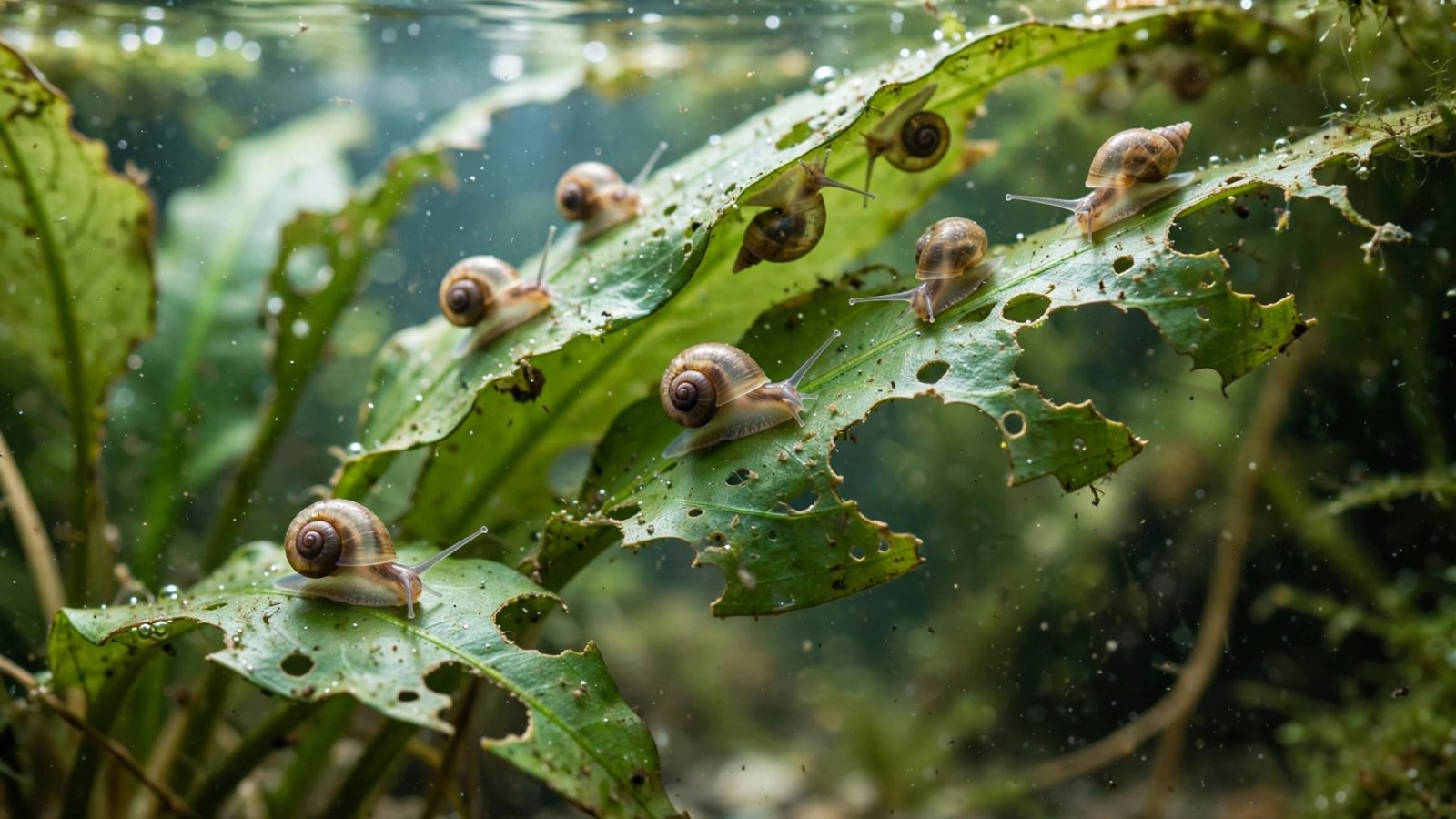
Are snails eating your aquarium plants, or are they just cleaning up the crime scene? This is one of the hobby’s most persistent arguments, because the truth is genuinely mixed: most common aquarium snails are harmless algae-eaters wrongly accused, but a few species really do eat live plants — and even the innocent ones will swarm damaged tissue in ways that look like guilt. This guide separates the culprits from the cleanup crew, teaches you to read the evidence, and gives you control methods that do not nuke your tank.
The Verdict Up Front
Most aquarium snails do not eat healthy live plants. Nerite snails, mystery snails, Malaysian trumpet snails, and rabbit snails are algae and detritus eaters. What they do eat enthusiastically is dying, damaged, and algae-coated tissue — which is why they are always found at the scene of holes in leaves and melting plants. They are the cleanup crew, not the killers — but their presence at every damaged leaf has convicted them in thousands of tanks.
Snails That Actually Eat Live Plants
Pond snails and bladder snails (in large numbers)
Normally detritus feeders, but starving populations — hundreds in a tank with no algae or leftover food — will rasp soft live plants. The damage is fine rasping on tender species, not clean holes. This is a population problem: the snails are telling you the tank is overfed and under-cleaned.
Apple snails (Pomacea canaliculata)
The true plant-eater, and the reason for the confusion: apple snails look like large mystery snails but devour live plants voraciously. They are restricted or illegal in many places precisely because of this. If your “mystery snail” is eating everything, verify the species — true mystery snails (Pomacea diffusa/bridgesii) are plant-safe; apple snails are not.
Large ramshorns (some individuals)
Most ramshorns are harmless, but large adults of some species develop a taste for soft-leafed plants like cabomba and ambulia. Damage is usually minor and limited to the softest species.
Assassin snails (indirect)
Assassins eat other snails, not plants — but wiping out your entire snail population removes the cleanup crew, after which dead tissue accumulates and algae increases. An indirect cost, not direct damage.
Reading the Evidence: Snails vs Deficiency
Before acting against snails, confirm they are actually guilty:
| Evidence | Points to snails | Points to deficiency/disease |
|---|---|---|
| Damage shape | Ragged rasping, chewed edges | Round pinholes with yellow halos |
| Old vs new leaves | Any leaves, often soft new growth | Old leaves first (mobile nutrients) |
| Caught in the act | Snail visibly rasping healthy tissue | Snails only on already-damaged areas |
| Species present | Known plant-eaters identified | Only nerites/mysteries/trumpets present |
The single best test: watch at night with a flashlight. Snails are nocturnal feeders. If you find them rasping firm green tissue at 2 AM, you have your culprit. If they are only on melting or algae-coated leaves, they are innocent.
Control Methods (If They Are Guilty)
Manual removal and trapping
Blanched zucchini or lettuce on a fork, left overnight and removed in the morning covered in snails, steadily reduces populations. Hand-picking during water changes works for larger species. Slow but completely safe.
Feed less
Snail populations track food availability precisely. Cutting feeding to what fish finish in two minutes, plus removing uneaten food, crashes pest snail numbers within weeks — no chemicals needed. This is the real long-term fix for pond/bladder snail explosions.
Assassin snails
A few assassin snails will hunt pest snails to near-extinction over a couple of months. Effective and chemical-free, but permanent — they will also eat any ornamental snails you value, and they breed (slowly) themselves.
What to avoid
- Copper-based snail killers: effective against snails, but copper persists in substrate and silicone, kills shrimp and sensitive invertebrates, and can harm plants at treatment doses. A last resort with lasting consequences.
- “Snail away” chemicals generally: most are copper or harsh biocides with the same collateral damage.
- Loaches as snail control: only if the loach suits your tank anyway — never buy fish as pest control unless you want that fish for its own sake.
Protecting Plants While Keeping the Crew
The ideal outcome is keeping beneficial snails while stopping damage:
- Keep plants healthy. Snails target weak tissue — a well-fed, well-lit plant resists rasping far better than a deficient one. Fix the underlying nutrient issues and the “snail damage” often stops.
- Feed the snails, not the plants. Algae wafers or blanched vegetables give snails easier food than live leaves. Well-fed snails rarely bother healthy plants.
- Choose tough plants (anubias, Java fern, crinum) in tanks with known nibblers — thick leaves resist rasping.
- Quarantine new plants to avoid importing pest snail eggs — a quick alum or bleach dip kills eggs without harming the plant.
The Balanced View
Here is the honest accounting: in the average planted tank, snails do far more good than harm. They eat algae you cannot reach, clean up dead tissue before it fouls the water, turn the substrate (trumpet snails), and their grazing is an early warning system — a sudden snail population boom means overfeeding, and snails swarming a plant means that plant was already in trouble. Before declaring war on snails, ask what they are telling you about the tank. Usually, they are the messengers.
Frequently Asked Questions
Will snails eat my new tissue-culture plants?
Tender new growth is the most vulnerable. In tanks with known nibblers, protect fresh plantings for the first few weeks — or accept some grazing losses as the plants establish tougher growth.
How do I tell apple snails from mystery snails?
Apple snails (P. canaliculata) grow larger (fist-sized), have a more rounded shell profile, and lay pink egg clutches above the waterline in massive quantities. True mystery snails stay smaller with a more pointed spire. When in doubt, ask the seller for the scientific name.
I removed all snails and algae got worse — why?
You removed the cleanup crew. Snails were eating the algae and detritus; without them, it accumulates. This is why indiscriminate snail eradication often backfires — target the actual problem (overfeeding, imbalance) instead.
Snail Species Profiles: Friend or Foe?
Nerite snails — firmly friend
The best algae-eating snail in the hobby. Cannot reproduce in freshwater (no population explosion), eats film algae, diatoms, and some green spot algae off glass and leaves. Never eats healthy plants. The white eggs they lay on hardscape are unsightly but harmless.
Mystery snails (Pomacea diffusa) — friend
Gentle giants that eat detritus, leftover food, and dead plant matter. May rasp very soft dying leaves but do not damage healthy plants. Need calcium-rich water for shell health and will starve in spotless tanks — supplement with algae wafers or vegetables.
Malaysian trumpet snails — friend
Burrowing snails that aerate substrate, eat detritus, and emerge at night. The single most beneficial snail for planted tanks — their burrowing prevents the anaerobic compaction behind root rot. Population tracks food; explode only in overfed tanks.
Ramshorn snails — mostly friend
Excellent detritus and algae cleaners. Small species are entirely plant-safe; only large adults occasionally sample soft plants. Their pink/red color morphs are attractive enough that many keepers cultivate them deliberately.
Bladder and pond snails — neutral
Arrive as hitchhikers on plants. Eat algae, detritus, and dead tissue. Reproduce explosively when overfed — the population boom is a symptom of excess food, not a snail problem per se. Only rasp live plants when starving in huge numbers.
Rabbit snails — friend (with caveats)
Beautiful, slow-breeding, plant-safe detritus eaters from Sulawesi. Need hard, alkaline, warm water — they will not thrive in soft acidic setups. Expensive enough that you will protect them, not the other way around.
Assassin snails — tool, not pet
Eat other snails exclusively. Deploy 3–5 per 50 liters against pest outbreaks; remove or rehome when the job is done if you want to keep ornamental snails. They breed slowly but will establish.
Preventing Hitchhikers: The New-Plant Dip
Pest snails arrive as eggs on new plants. A pre-planting dip prevents 95% of introductions:
- Alum dip: 1 tablespoon alum per liter of water, soak 3–5 minutes. Kills eggs and most pests; gentle on plants.
- Bleach dip: 1:20 bleach-water, 60–90 seconds. Harsher — effective but rinse exhaustively and avoid on delicate plants.
- Peroxide dip: 3% hydrogen peroxide, 3–5 minutes. Middle ground.
After any dip, rinse in clean water and soak in conditioned water before planting. Inspect leaves visually too — egg clutches are tiny jelly dots, usually on leaf undersides.
When to Actually Worry
Worry about snails when: you have identified a true plant-eating species (apple snails), you have witnessed nocturnal rasping of healthy tissue, or soft plants are being destroyed despite otherwise perfect plant health. In every other case — snails on damaged leaves, population booms, snails “everywhere” — the snails are responding to tank conditions, not causing plant problems. Fix the food source (overfeeding), fix the plant health (nutrients, light), and the snail “problem” resolves itself into a snail workforce.