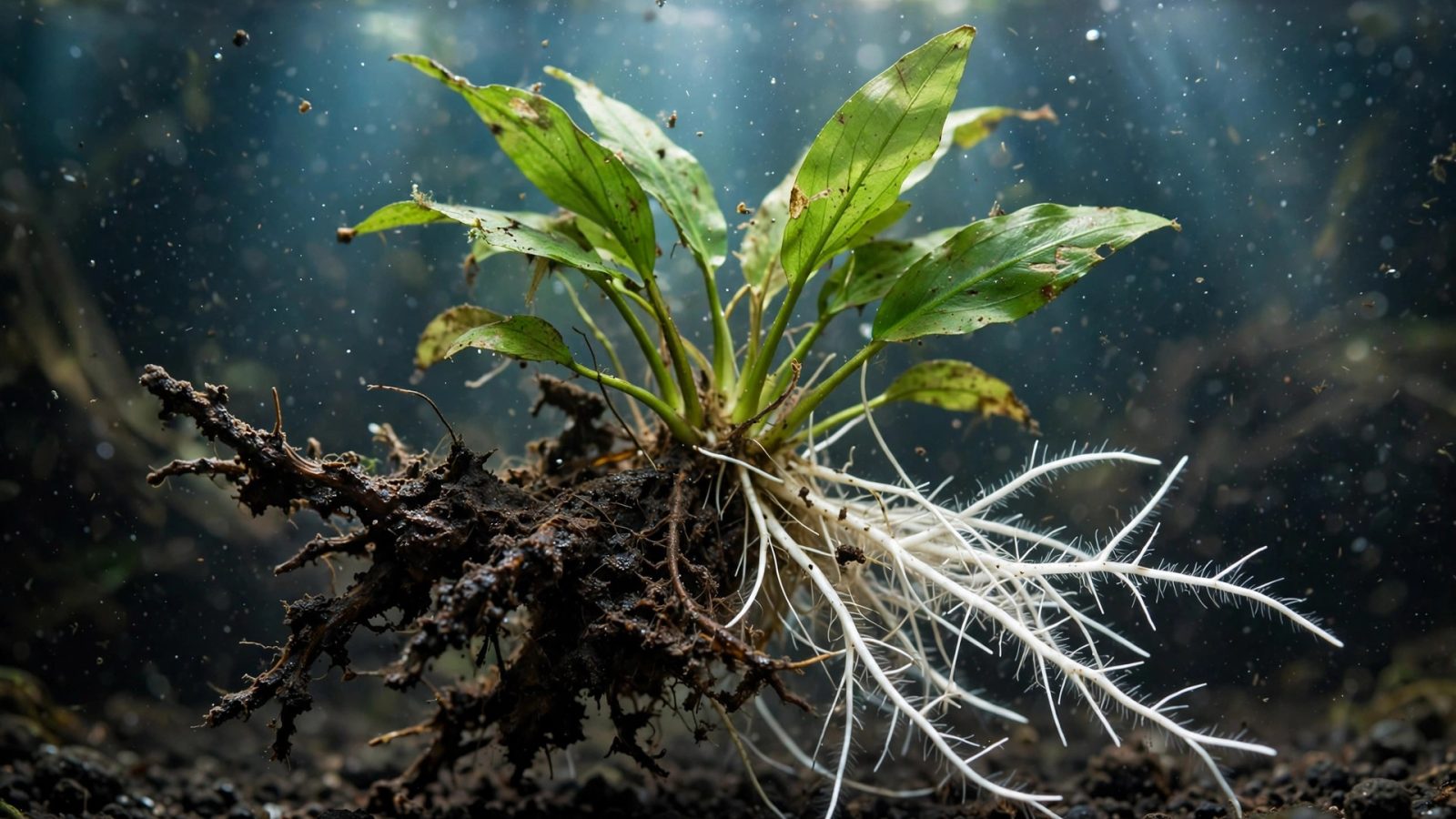
When aquarium plant roots are rotting, the plant is losing its foundation — and because the damage is underground, it is usually discovered late, when leaves are already browning from the base up. Root rot in aquariums has a short list of causes (anaerobic substrate, buried rhizomes, chronic overwatering-equivalent conditions), and catching it early means the difference between a rescue and a funeral. This guide covers diagnosis, the rescue protocol, and how to set up substrate that does not rot roots in the first place.
Recognizing Root Rot vs Healthy Roots
| Healthy roots | Rotting roots |
|---|---|
| White, cream, or light tan; firm | Brown, gray, or black; mushy, slimy |
| Fine root hairs visible | Outer sheath sloughs off leaving a thin thread |
| Earthy or neutral smell | Rotten-egg (hydrogen sulfide) smell |
| Plant anchored firmly | Plant lifts out with almost no resistance |
Above ground, root rot shows as browning climbing from the base, leaves detaching with a gentle tug, and new growth stalling or emerging deformed. If the base browning pattern matches, unplant and inspect — the roots will confirm.
Cause 1: Anaerobic Substrate
The most common cause. Deep, compacted, fine substrate — especially sand beds over 7–8cm deep that are never disturbed — develops oxygen-free zones where anaerobic bacteria produce hydrogen sulfide. Roots entering these zones suffocate and rot. Signs: black patches in the substrate, rotten-egg smell when disturbed, bubbles rising from the bed.
Fix: during rescue, remove the plant and gently rinse roots. Long-term: keep substrate depth moderate (4–6cm for sand), stir or vacuum the surface regularly, and consider Malaysian trumpet snails — their burrowing gently aerates the bed. For new setups, a coarser grain or a soil base with a sand cap resists compaction better than deep fine sand alone.
Cause 2: Buried Rhizomes (Anubias, Java Fern, Bucephalandra)
Rhizome plants do not grow roots for substrate feeding the way swords do — their rhizome is a stem that must stay exposed to the water. Buried in substrate, it rots from the outside in, and the leaves brown from the base as their supply lines die.
Diagnosis: anubias/Java fern/buce planted in the substrate; rhizome soft and brown when squeezed; leaves detaching from a mushy base.
Fix: unplant immediately, trim all mushy rhizome back to firm green-white tissue with sterile scissors or a blade, and reattach to hardscape (thread, glue, or wedged into a crevice) with the rhizome fully above the substrate. Even a partially rotted rhizome with one firm section and a couple of leaves can recover — these plants are remarkably tenacious.
Cause 3: Planted Too Deep (Crown Burial)
Rosette plants (swords, crypts, vallisneria) grow from a central crown where leaves meet roots. Buried below the substrate surface, the crown rots — the plant equivalent of planting a tree with its trunk underground.
Fix: replant with the crown exactly at the substrate surface, roots spread below. When buying potted plants, remove the rockwool and plant at the depth the plant was growing, not deeper.
Cause 4: Chronic Organic Overload
Substrate saturated with decaying matter — years of mulm, dead root masses from previous plants, overfeeding settling into the bed — creates a bacterial load that overwhelms roots. This is the slow version, developing over a year or more in unmaintained substrates.
Fix: aggressive but staged cleaning: vacuum a third of the bed per week over several weeks. Remove dead root masses when replanting (old roots left to rot are a major contributor). In severe cases, a partial substrate replacement of the worst section.
Cause 5: Transition Rot on New Plants
Emersed-grown plants sometimes shed not just leaves but fine roots during transition, which looks like rot but is normal turnover — if new white root tips are emerging simultaneously.
Diagnosis: new plant (within weeks); some root die-off but fresh white tips present; crown/rhizome firm.
Fix: leave it alone. Trim only fully mushy roots, keep the plant planted, and let the new root system establish. See transition melt for the above-ground half of this process.
The Rescue Protocol
- Remove the plant gently. Work slowly — tearing roots causes more damage.
- Rinse in tank water. Wash away substrate and get a clear look.
- Trim ruthlessly but precisely. With sterilized scissors, cut away all mushy, black, foul-smelling root tissue back to firm, light-colored material. For rhizomes, slice back to firm tissue — be aggressive; rot spreads through soft tissue fast.
- Disinfect the cuts (optional but wise). A brief dip in 3% hydrogen peroxide (30 seconds) or a potassium permanganate dip kills surface pathogens on the trimmed plant. Rinse well.
- Replant correctly. Crown at the surface, rhizome above the substrate, roots spread — in a cleaned or fresh area of substrate, not back into the anaerobic pocket it came from.
- Reduce demands while recovering. Trim damaged leaves (they drain the plant), keep light moderate, and do not fertilize heavily until new growth appears.
- Watch for new white root tips over the next 2–4 weeks — the sign the rescue worked.
When Rescue Will Not Work
Be honest with yourself: if the entire rhizome is mush, if the crown has dissolved into slime with no firm tissue remaining, or if every root is black threads — the plant is gone. Remove it fully (decaying plants spike ammonia) and focus on fixing the substrate cause before replanting. A rescue attempt on a fully rotted plant just fouls the tank.
Substrate Setup That Prevents Root Rot
- Right depth: 4–6cm for most setups. Deep beds need a reason (large swords) and maintenance to match.
- Right grain: avoid ultra-fine compacting sands as the sole substrate in deep beds; medium sand or soil-with-cap breathes better.
- Plant correctly from day one: crowns at the surface, rhizomes exposed. Most root rot is planted, not grown.
- Maintain the bed: surface vacuum during water changes, remove dead root masses when replanting, and let trumpet snails work the deeper layers.
- Feed roots deliberately: root tabs for heavy root feeders prevent the starvation-weakening that makes roots rot-prone. Match the method to the plant — see liquid fertilizer vs root tabs.
Frequently Asked Questions
Can roots regrow after rot?
Yes — vigorously, if any healthy crown/rhizome tissue remains. Aquarium plants evolved to regrow roots constantly; the rescue protocol works because the plant wants to recover. The limiting factor is how much healthy base tissue survived.
Should I use hydrogen peroxide on roots routinely?
No — only as a one-time disinfectant during rescue. Routine peroxide damages the beneficial root-zone biology along with the bad.
Do I need to replace all my substrate?
Rarely. Localized anaerobic pockets are fixed by cleaning and depth correction. Full replacement is a last resort for substrate that is years past maintenance — and even then, replace in sections to preserve biological filtration.
Root Health by Plant Group
Heavy root feeders (swords, crypts, vallisneria, lotus)
These build extensive root systems and depend on substrate nutrition. They need: nutrient-rich or supplemented substrate (root tabs in inert substrates), moderate depth for root runs (5–7cm), and periodic root-zone feeding. Their roots are thick and white when healthy — any browning of these fleshy roots is significant.
Rhizome plants (anubias, Java fern, buce)
Roots are for anchoring, not feeding — they absorb from the water column. These must never be planted in substrate; tie or glue to hardscape. Their roots are thin, dark, and wiry even when healthy — do not mistake normal dark anchor roots for rot. Judge by the rhizome: firm = alive, mush = rot.
Stem plants
Fine, feathery white roots from nodes. Highly regenerative — a stem with any healthy node can regrow a full root system in weeks. Very forgiving of root damage; trim and replant freely.
Carpeting plants
Shallow, delicate root mats. Vulnerable to anaerobic conditions because they live in the top centimeter — if the surface goes anaerobic, the carpet dies first. Keep the top layer clean and avoid burying runners under fresh substrate additions.
Hydrogen Sulfide: The Rotten-Egg Warning
That rotten-egg smell when you disturb the substrate is hydrogen sulfide (H2S) — toxic to roots, fish, and beneficial bacteria. Small amounts in deep beds are normal and harmless; the danger is a large sudden release from a long-undisturbed anaerobic zone.
If you smell it strongly: do not stir the whole bed. Do a water change, surface-vacuum gently, and address the bed in sections over several weeks. Add surface agitation to oxygenate the water. Consider whether the bed is too deep or too fine — chronic H2S means the substrate design needs changing, not just cleaning.
MTS snails as prevention: Malaysian trumpet snails burrow through the top few centimeters continuously, preventing the compaction that creates anaerobic zones. A healthy MTS population is the cheapest substrate insurance available — they are nocturnal, harmless to plants, and self-regulating in population.
Replanting After a Rot Event: Step by Step
- Do not replant into the same pocket. The anaerobic zone or pathogen load that rotted the roots is still there. Choose a fresh area or remediate the spot first.
- Remediate the pocket: siphon out the blackened substrate in that area, replace with fresh substrate, and let it settle a day before replanting.
- Trim roots to healthy tissue — a clean cut heals faster than a ragged rot margin.
- Plant shallow first. Slightly shallow planting in the recovery phase keeps the crown oxygenated; the plant will anchor itself deeper as roots grow.
- Hold off on root tabs for two weeks — fertilizing a damaged root system can burn it. Resume once new white tips appear.
Root Rot vs Normal Root Turnover
Not every brown root is rotting. Aquarium plants constantly shed and replace fine roots — gentle brown tinting on older roots with firm texture and white growing tips is normal turnover, especially after replanting. True rot is unmistakable once you have seen both: rot is mushy (tissue collapses between your fingers), often slimy, and smells wrong. Normal older roots are discolored but structurally sound — they hold their shape when pinched.
The beginner mistake is tearing up a healthy plant to “check” roots that were fine, causing transplant shock for no reason. Only unplant when above-ground symptoms (base-up browning, plant detaching easily, stalled growth with a firm crown) justify the disturbance. Every unplanting costs the plant 1–2 weeks of re-establishment — spend that budget only on real suspicion.
Quarantining New Plants: Root Inspection Protocol
New plants can arrive with root problems from the supplier — rotted from shipping, desiccated, or carrying pests. A 5-minute inspection before planting prevents introducing problems:
- Unwrap and smell. Foul odor from the packaging means rot started in transit — trim aggressively before planting.
- Rinse and inspect roots. Trim any black/mushy roots; keep firm ones even if discolored.
- Remove rockwool completely. Leftover rockwool around the crown traps debris and rots. Split it gently and pick it all out.
- Dip for pests (alum or peroxide) — eggs and parasites hide in root masses.
- Plant and leave alone. The inspection was the disturbance budget; now the plant needs 4+ weeks of stability.
Plants that arrive healthy and are planted correctly rarely develop root rot in a maintained substrate. Most rot cases trace back to skipping this inspection (planting already-rotting stock) or incorrect planting depth — both preventable in five minutes.