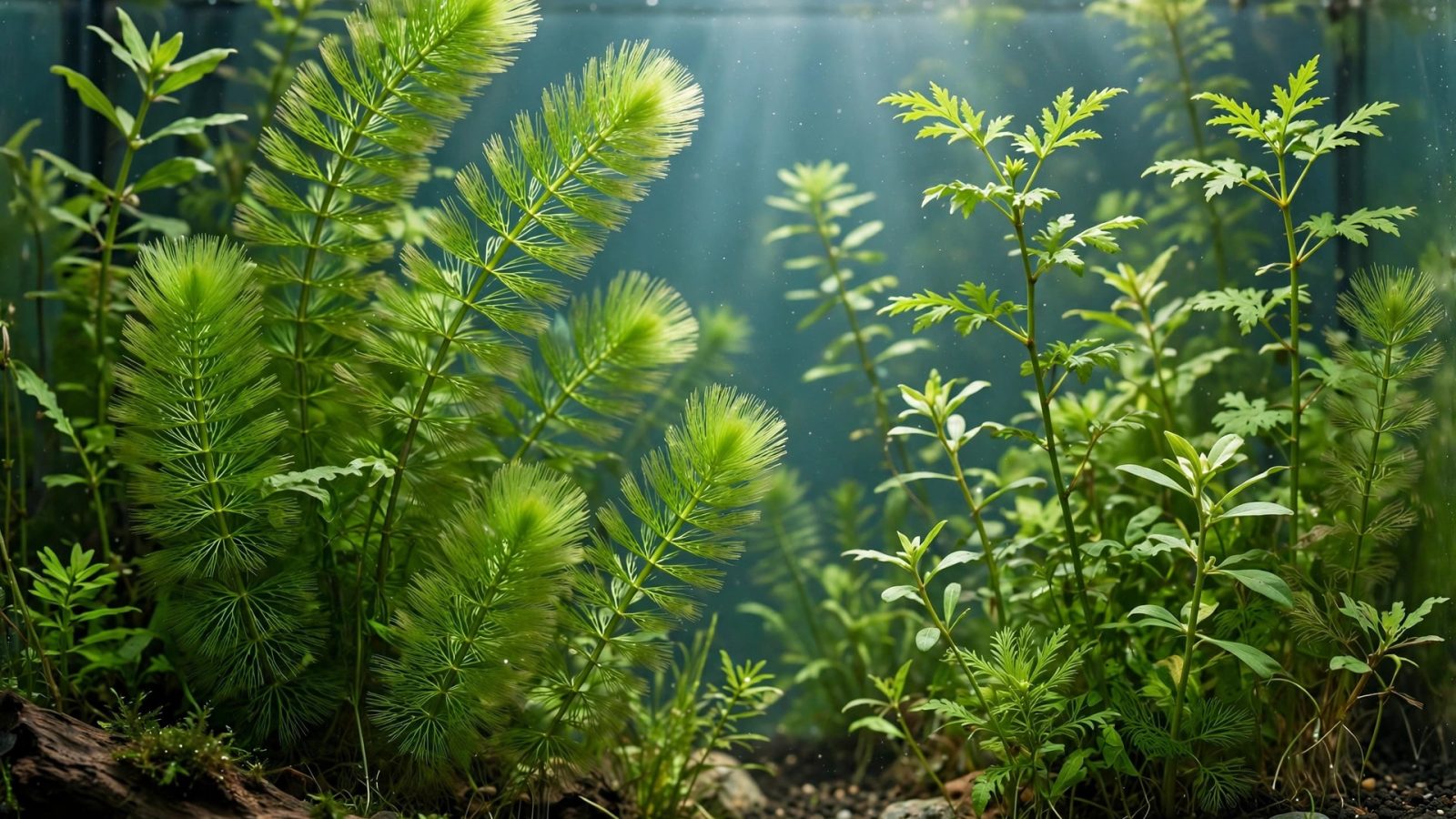
The standard advice for a new aquarium is “wait 4–6 weeks for the cycle to complete” — staring at an empty glass box while bacteria colonize your filter. There’s a better way: fast-growing aquarium plants for new tanks act as a living filtration system from day one, absorbing ammonia directly, outcompeting algae for nutrients, and giving you a planted tank to enjoy while the bacterial cycle establishes quietly in the background. These ten species are chosen for one trait above all: speed.
This isn’t just aesthetics — it’s chemistry. Plants preferentially absorb ammonium (the ionized form of ammonia) as a nitrogen source, often faster than nitrifying bacteria can process it. A heavily planted new tank with fast growers can show zero detectable ammonia from the start, a technique experienced hobbyists call the “silent cycle.” It doesn’t replace cycling — your filter bacteria still need to establish — but it makes the new-tank period dramatically safer and less stressful.
How to Use Fast Growers in a New Tank
The method is simple: plant heavily on day one. Aim for at least 50–70% of the substrate planted, with fast growers dominating. Floaters cover the surface; stems fill the background; root-feeders anchor the midground. Don’t add fish for the first week — let the plants settle and start growing. Test ammonia and nitrite every few days; with enough plant mass, you’ll see minimal spikes. Add livestock gradually starting week two, and only begin removing or replacing the fast growers once the tank is stable and your permanent scape plants have established (usually 2–3 months).
The 10 Fastest Aquarium Plants for New Tanks
1. Hornwort (Ceratophyllum demersum)
The undisputed speed champion. Hornwort can grow inches per week, needs no planting (anchor bunches or let it float), and absorbs nutrients so aggressively it’s been studied for wastewater treatment. In a new tank, a few bunches immediately start pulling ammonia and starving algae. It’s ugly-beautiful — feathery and wild — so treat it as temporary scaffolding, not permanent scape. The one caution: it sheds needles when stressed, so acclimate it gently and don’t move it once placed. Also excellent in cold-water setups.
2. Water Wisteria (Hygrophila difformis)
Water wisteria is the best planted fast grower — it roots properly, looks like a real aquascape plant, and still grows fast enough to matter for water quality. Its lacy leaves provide enormous surface area for nutrient absorption, and it adapts to a wide range of conditions. Plant stems 2 inches apart in the background; within a month you’ll be trimming weekly. Unlike hornwort, wisteria can stay permanently — many aquarists keep it as a long-term background plant. It’s also a star of our tall-tank background list.
3. Anacharis (Egeria densa)
Anacharis is the old-school workhorse — cheap, nearly indestructible, and relentlessly fast. It grows in any water, any light short of darkness, and doesn’t care about substrate (it absorbs through its leaves). Bunch 5–6 stems together and anchor them; they’ll reach the surface within weeks. Note: it’s invasive in many regions, so never release it into local waterways — dispose of trimmings in the trash. Some jurisdictions restrict its sale; Brazilian pennywort below is the legal alternative in those areas.
4. Water Sprite (Ceratopteris thalictroides)
Water sprite is the multitasker: plant it in the substrate for a feathery rooted plant, or float it for an instant nutrient-sponge mat. The floating form grows fastest and is ideal for new tanks — it has unlimited atmospheric CO2 access and shades the water below, suppressing algae during the vulnerable early weeks. It propagates by plantlets on its leaves; a single plant becomes many within a month. Thin the floaters regularly or they’ll block too much light — see our floating plant guide for management.
5. Guppy Grass (Najas guadalupensis)
Guppy grass earns its name: fine, dense, fast-growing, and beloved by fry and shrimp as a hiding forest. It can be planted or floated, grows in almost any conditions, and propagates from tiny fragments — you’ll never need to buy it twice. In a new tank, a softball-sized clump quickly becomes a nutrient-absorbing thicket. It’s not the prettiest plant (honestly, it’s scruffy), but as a temporary new-tank workhorse it’s unmatched. Breeders keep it permanently for the fry cover alone.
6. Brazilian Pennywort (Hydrocotyle leucocephala)
Pennywort’s round, lily-pad-like leaves on trailing stems bring a distinctive look to the fast-grower category. It grows quickly both planted and floating, with the floating form producing the most vigorous growth. It’s less brittle than hornwort and prettier than guppy grass, making it a fast grower you might actually keep. It appreciates moderate light — in dim tanks it stretches with long internodes. Pinch back regularly to encourage bushiness.
7. Rotala rotundifolia
The prettiest fast grower. Rotala grows upright stems rapidly under moderate light, and its small round leaves take on pink-red hues near the surface — giving your new tank color while it cycles. It’s a genuine stem plant that belongs in a permanent scape, so unlike hornwort or guppy grass, you won’t need to remove it later. Trim and replant tops every 2–3 weeks; each trimming doubles your stand. It bridges the gap between “temporary cycling aid” and “permanent aquascape plant” better than anything else here.
8. Ludwigia repens
Ludwigia repens is rotala’s bolder cousin — larger leaves, stronger red coloration, equally fast growth. It tolerates beginner conditions cheerfully and grows toward the light with determination, making it excellent for filling the background of a new tank quickly. The red intensifies with good light and iron; even in moderate light you get attractive bronze-green. Like rotala, it’s a keeper — plant it as a permanent resident, not a temporary aid.
9. Hygrophila polysperma
Polysperma is the “plant it and forget it” fast grower — broad green leaves, thick stems, growth so reliable it’s almost weedy. It tolerates low light better than most fast growers, making it ideal for new tanks with stock lighting. One caution: it’s restricted or banned in some regions as an invasive species (check local regulations). Where legal, it’s among the easiest plants in the hobby. The ‘Rosanervig’ cultivar offers pink-veined variegation for visual interest.
10. Pearl Weed (Hemianthus micranthemoides)
Pearl weed closes the list as the fast-growing foreground option — because new tanks need bottom coverage too. It spreads rapidly when trimmed short, filling the foreground in weeks rather than months, and its tiny bright-green leaves contrast beautifully with larger background stems. Trimmings root effortlessly; every haircut becomes new plants. It’s the fastest path to a finished-looking foreground in a new setup, detailed further in our carpeting plant guide.
The Silent Cycle: A Practical Walkthrough
Day 1: Set up substrate, hardscape, and fill the tank. Plant fast growers densely — background stems, floating water sprite or frogbit covering 30–50% of the surface, pearl weed in the foreground. Start the filter and heater; run lights 6 hours daily.
Days 2–7: Let plants settle. Test ammonia and nitrite every 2–3 days. With heavy planting, expect ammonia to stay at or near zero — the plants are eating it. Do a 30% water change mid-week to export initial nutrient leaching from substrate.
Weeks 2–4: Begin adding livestock slowly — a small school of hardy fish or a few shrimp. The plants plus developing bacteria handle the modest bioload. Increase photoperiod to 7–8 hours as plant mass grows. Trim fast growers as needed and remove the clippings (exporting nutrients).
Months 2–3: The tank is stable. Now decide: keep the fast growers as permanent residents (rotala, ludwigia, wisteria all qualify) or gradually replace scaffolding species (hornwort, guppy grass) with your planned scape plants. Never remove all fast growers at once — replace gradually over weeks to avoid destabilizing the nutrient balance.
What Fast Growers Can’t Do
Honest limitations: fast growers don’t instantly cycle a tank — beneficial bacteria still need weeks to colonize filter media, and the plants are supplementing that process, not replacing it. They also don’t fix overstocking; no amount of hornwort compensates for too many fish too soon. And most fast growers are nutrient hogs that can starve slower plants if you don’t fertilize — once the tank matures and you add anubias, crypts, or other slow species, maintain a regular liquid fertilizer routine so the slow growers aren’t outcompeted into deficiency. The low-tech fertilizing method covers the balance.
Frequently Asked Questions
Can I add fish on day one with enough plants?
Technically a heavily planted tank can handle a light bioload immediately, but patience is still wise. Give plants 5–7 days to start actively growing before adding fish — freshly planted stems in transplant shock absorb little. Start with a fraction of your planned stocking.
Will fast growers starve my other plants?
They can, in mature tanks. Fast growers are aggressive nutrient competitors — that’s their job in a new tank, but later they may outcompete slow species. Regular fertilizing and periodic thinning keep the peace.
Do I need CO2 for these plants?
No. Every plant on this list grows fast without injected CO2 — that’s the point. CO2 would make them grow even faster, but in a new tank you usually have the opposite problem (too much growth, too fast).
When should I remove the temporary plants?
Once your permanent scape plants are established and growing (2–3 months), remove scaffolding species gradually — a third per week. If algae appears after removal, you went too fast; the remaining plant mass wasn’t enough.
Why Fast Growers Beat Algae: The Competition Mechanism
New-tank algae isn’t bad luck — it’s an ecological vacancy. In an empty new tank, light and nutrients have no competitors, so algae (which colonizes any surface within days) claims them. Fast-growing plants close that vacancy by monopolizing the same resources: they absorb ammonia, nitrate, phosphate, and micronutrients from the water faster than algae can, and their leaves shade surfaces where algae would anchor.
This is why planting density matters more than species choice. A single bunch of hornwort in a 20-gallon won’t outcompete anything; ten bunches plus floating cover will. The critical period is weeks 2–6, when nutrient leaching from new substrate peaks and bacterial colonies are still ramping up. Get through that window with heavy plant mass and stable parameters, and the tank emerges essentially algae-free — the foundation every successful aquascape is built on.
Two supporting tactics amplify the effect: start with a short photoperiod (6 hours for the first month — plants adapt faster than algae to limited light) and stock a cleanup crew early. Amano shrimp and nerite snails can go in during week two in a planted tank; they graze the inevitable early algae films without disturbing plants. Otocinclus follow once soft green algae appears for them to eat.
Transitioning: From Scaffolding to Scape
The most common mistake with fast growers is treating them as permanent by default. Hornwort, guppy grass, and anacharis served their purpose — now your aquascape deserves intention. But timing and technique matter:
- Wait for permanence signals: your slow plants (anubias putting out new leaves, crypts established, carpet spreading) indicate the tank no longer needs scaffolding.
- Remove in stages: take out one fast-growing species per week, not all at once. Each removal shifts the nutrient balance; gradual change lets the remaining plants and bacteria adjust.
- Replace, don’t just remove: every gap left by a removed fast grower is an algae opportunity. Have the replacement plant ready — a midground crypt, a midground group, or additional stems of your permanent background species.
- Keep one workhorse: experienced aquarists permanently keep a floating plant (frogbit, water sprite) even in mature tanks. Floaters are the canary and the safety net — they signal nutrient issues first (yellowing floaters = hungry tank) and absorb excess before it feeds algae.
Some fast growers never need to leave. Rotala, ludwigia, water wisteria, and pearl weed are legitimate permanent residents — the “temporary” label applies mainly to the scruffy nutrient sponges (hornwort, guppy grass, anacharis). Design your final scape around the keepers from the start, and the transition becomes evolution rather than demolition.