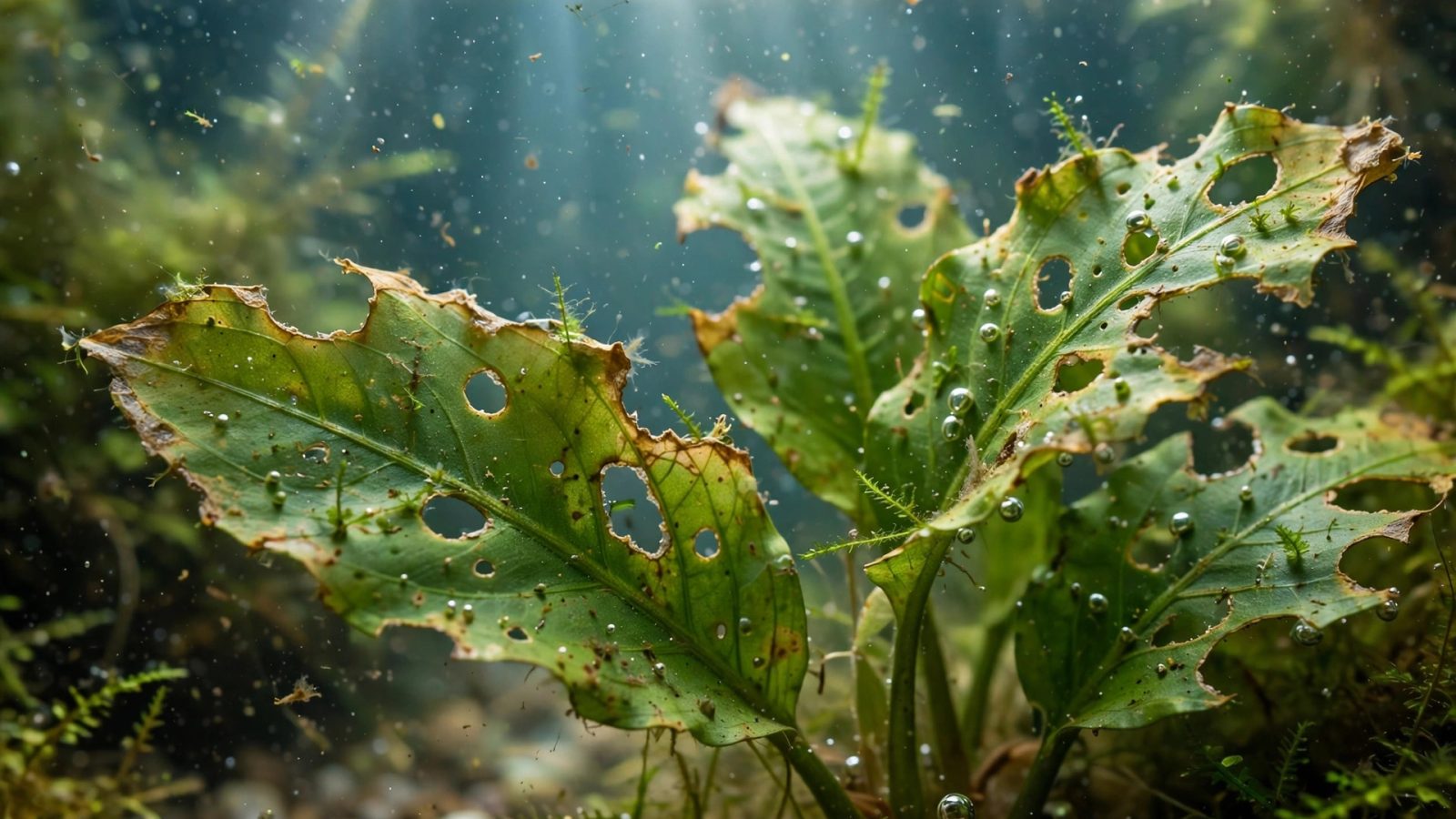
Finding holes in aquarium plant leaves sends most hobbyists down one of two paths: blaming their snails, or assuming the plant is diseased. In reality, the most common cause is neither — it is potassium deficiency, one of the most widespread and most misdiagnosed nutrient problems in the hobby. This guide teaches you to tell the difference between deficiency holes, snail damage, and the handful of other causes, and gives you the fix for each.
Potassium Deficiency: The Classic Pinholes
Potassium is a mobile macronutrient that plants consume in large amounts, and it is not meaningfully replenished by fish waste. When it runs short, the plant pulls potassium from old leaves to supply new growth. The abandoned tissue dies in small patches — pinholes, usually 1–3mm across, often ringed with a yellow halo — starting on the oldest, lowest leaves.
How to recognize potassium holes
- Size and shape: small, round pinholes rather than ragged tears.
- Yellow halos: the tissue around each hole yellows before the hole forms. This halo is the signature — snail damage does not produce it.
- Location: old leaves first, working upward. New growth looks normal (sometimes slightly small).
- Leaf margins yellow too: yellowing leaf edges accompany the holes in moderate deficiency.
- No slime trails, no missing chunks: the leaf is otherwise intact.
The fix
Confirm with the pattern above, then supplement potassium — either via a complete all-in-one fertilizer (most include ample K) or standalone potassium sulfate for targeted dosing. Holes stop appearing on new growth within two to three weeks. Existing holes never fill in, so trim the worst leaves and judge success by fresh foliage. For the full diagnostic method, see our aquarium plant nutrient deficiency guide.
One caution: if you already dose a complete fertilizer at full strength and still see pinholes, do not just add more. Check whether fast-growing stem plants are outcompeting slower ones, and verify your dosing is actually reaching the plants (poor circulation can starve corners of the tank even in a well-dosed aquarium).
Snail Damage: What It Actually Looks Like
Snails get blamed for nearly every hole in the hobby, but most common aquarium snails — nerites, mystery snails, Malaysian trumpet snails — prefer algae, detritus, and already-dead tissue over healthy live leaves. They are usually found at the holes because they are eating the decaying edges, not because they made them.
When snails really are the culprit
- Ragged, irregular chewing from leaf edges inward, not clean round pinholes.
- Damage on new and old leaves alike — deficiencies respect the old-first rule; hungry snails do not.
- Visible feeding: you actually see the snail rasping healthy tissue.
- Species known for it: pond snails and bladder snails in large numbers can rasp soft plants; apple snails (not mystery snails) eat live plants enthusiastically; some large ramshorns develop a taste for soft-leafed species.
If you have confirmed snail damage, our guide to snails eating aquarium plants covers which species are guilty and how to control them without nuking your cleanup crew.
Fish and Shrimp Damage
Several popular fish rasp or tear leaves: goldfish, silver dollars, and some cichlids eat soft plants outright; plecos rasp broad leaves (leaving pale scrape marks rather than holes); and even “plant-safe” fish may sample tender new shoots. Shrimp do not make holes in healthy leaves — if shrimp swarm a leaf, the tissue was already dying and they are cleaning up.
Diagnosis: damage correlates with a specific inhabitant’s behavior; often torn edges rather than pinholes; may appear overnight after introducing the fish.
Fix: this is a stocking problem, not a plant problem. Either choose tougher plants (anubias, Java fern, crinum) or rehome the herbivore. No fertilizer fixes teeth.
Mechanical Damage
Holes and tears from handling are common and harmless: leaves creased during planting, pinched by planting tweezers, or torn by strong filter outflow battering. These show as clean tears or creases, often along the midrib, appearing within days of planting or maintenance.
Fix: trim the damaged leaf if it bothers you; the plant will replace it. Handle new plants gently and angle filter outflow away from delicate species.
Algae Weakening Followed by Decay
Sometimes the sequence is: algae colonizes a leaf → the shaded tissue weakens → the weakened spot decays into a hole. The hole is the end of a chain, not the start. Look for algae remnants around the hole’s edge.
Fix: address the underlying algae cause (usually light/CO2/nutrient imbalance) rather than the holes. Trim badly affected leaves — a leaf that cannot photosynthesize through its algae coat is a liability.
Old Age and Natural Decay
Old leaves eventually develop weak spots that tear or decay into holes as the plant reclaims mobile nutrients. A hole or two on the oldest leaf of an otherwise vigorous plant is normal senescence.
Diagnosis: isolated to the single oldest leaf; everything else pristine.
Fix: trim the old leaf. That is the plant’s retirement plan working as designed.
The Side-by-Side Diagnostic
| Feature | Potassium deficiency | Snail damage | Fish damage |
|---|---|---|---|
| Hole shape | Round pinholes | Ragged chewing | Tears, missing chunks |
| Yellow halo | Yes, typical | No | No |
| Old vs new leaves | Old first | Any | Usually soft new growth |
| Leaf edges | Yellowing edges | Chewed edges | Torn edges |
| Progression | Gradual, upward | Spreads with population | Sudden after stocking |
Prevention
- Dose potassium consistently. Most all-in-one fertilizers cover it — the deficiency usually appears in tanks dosed lean or not at all. A regular fertilizer schedule prevents the slow slide into deficiency.
- Do not overstock herbivores. Research each species’ plant-eating reputation before buying, not after the damage.
- Quarantine new plants. A quick inspection and rinse keeps pest snails from hitching in — though remember most hitchhikers are harmless algae-eaters, not plant-eaters.
- Watch old leaves weekly. Pinholes caught early mean a small dosing correction; pinholes ignored for two months mean a full replant of the affected stems.
Frequently Asked Questions
Will the holes heal after I fix the deficiency?
No. Holes are dead tissue and never fill in. Success looks like new leaves emerging without holes. Trim the worst-affected old leaves so you can clearly see whether the problem has stopped.
My snails are all over the holey leaves — doesn’t that prove they did it?
Not necessarily. Snails are drawn to decaying tissue and will graze the dying edges around deficiency holes. The yellow halo and old-leaf-first pattern point to potassium regardless of who is snacking on the aftermath.
Can too much potassium cause problems?
Potassium is quite forgiving — excess is rarely an issue in practice, and it does not drive algae the way excess light or ammonia does. Still, dose to resolve the deficiency and then maintain; more is not better once new growth is clean.
Less Common Causes Worth Knowing
Calcium-related holes in soft water
In very soft water (GH below 3), new leaves may develop necrotic spots that become holes — but unlike potassium, this hits new growth first, often with twisted or deformed leaf tips alongside. If your pinholes ignore the old-first rule and your water is very soft, suspect calcium/magnesium rather than potassium, and address it with a GH remineralizer rather than potassium sulfate.
Physical abrasion holes
Leaves rubbing against rough hardscape in strong current develop worn patches that become holes — usually on the leaves closest to the rock or wood, with a polished look around the hole. Rearrange so foliage is not sandblasted by flow against stone.
Nutrient burn holes (rare)
Gross overdosing of certain fertilizers — particularly iron-heavy micro mixes at multiples of the label dose — can necrotize leaf tissue into holes. The signature: holes appearing after a dosing increase, on leaves that were previously healthy, sometimes with bronzed speckling. Cut back to label dose and water change.
Viral or bacterial lesions (very rare)
True plant pathogens causing hole-like lesions are uncommon in aquariums but not impossible, usually arriving on imported plants. Suspect this only when: holes appear on new plants in quarantine, spread between plants of the same species, and do not match any deficiency pattern. Quarantine, remove affected leaves, and do not share trimmings until it resolves.
The Two-Week Confirmation Test
When you are unsure between potassium deficiency and pests, run this test instead of guessing:
- Photograph the worst-affected leaves (phone photos are fine).
- Dose potassium at label rates for two weeks. Change nothing else.
- Night-watch once with a flashlight to check for actual rasping.
- Compare: new leaves emerging without holes = potassium confirmed. New holes on fresh leaves despite dosing + visible night rasping = pests confirmed.
Two weeks of structured observation beats two months of argument on forums. The plants will tell you — you just have to set up the experiment and watch.
Holes in Specific Plants
- Swords (Echinodorus): heavy root feeders — holes in swords with adequate water-column dosing usually mean exhausted substrate. Push root tabs near the crown before adding more liquid potassium.
- Anubias: slow growers show potassium holes slowly, over months. Because each leaf lasts so long, a deficiency leaves a long historical record — count back through the leaves to date when the shortage began.
- Stem plants: holes on lower leaves while tops look perfect is textbook mobile-nutrient redistribution. Trim and replant tops; the bottoms were sacrificed by the plant’s own design.
- Floating plants: holes in floaters (frogbit, salvinia) with yellowing often mean the tank is lean overall — floaters have unlimited CO2 and light from the air, so they burn through water nutrients fastest and show shortages first. They are your canary.
Potassium in the Water Column vs Substrate
Potassium is primarily a water-column nutrient — plants absorb it through leaves, not roots. This has two practical consequences. First, substrate choice barely affects potassium availability; even the richest aquasoil does not supply meaningful potassium long-term, so every tank needs water-column supplementation eventually. Second, large frequent water changes can actually reduce potassium if your tap water is soft and low in minerals — heavy water changers sometimes induce the very deficiency they are trying to prevent by diluting their fertilizer faster than they dose it.
The fix is dosing discipline: dose after every water change, not just weekly on a fixed day, so the water column never sits depleted. If you change 50% weekly, you are removing half the potassium each time — the post-change dose is the most important one of the week. For tanks with very soft tap water, this single habit change resolves chronic low-grade pinholing that puzzled the owner for months.
When Holes Come With Company: Combined Symptoms
Real tanks rarely present textbook single deficiencies. Common combinations:
- Pinholes + yellow old leaves: potassium plus nitrogen — the tank is broadly underfed. Start a complete fertilizer rather than potassium alone.
- Pinholes + pale new growth: potassium plus iron — macros and micros both short. Complete macro + micro regimen needed.
- Pinholes + stunted tips: potassium plus calcium/boron — check GH; very soft water often lacks several nutrients at once.
- Holes + algae on the same leaves: the deficiency weakened the leaves and algae colonized. Treat the deficiency first (healthy leaves resist algae), then address any remaining algae separately.
When multiple symptoms overlap, resist the urge to dose everything at once. Start with a complete all-in-one at label dose — it addresses the common combinations together — then fine-tune individual nutrients only if specific symptoms persist after three weeks.