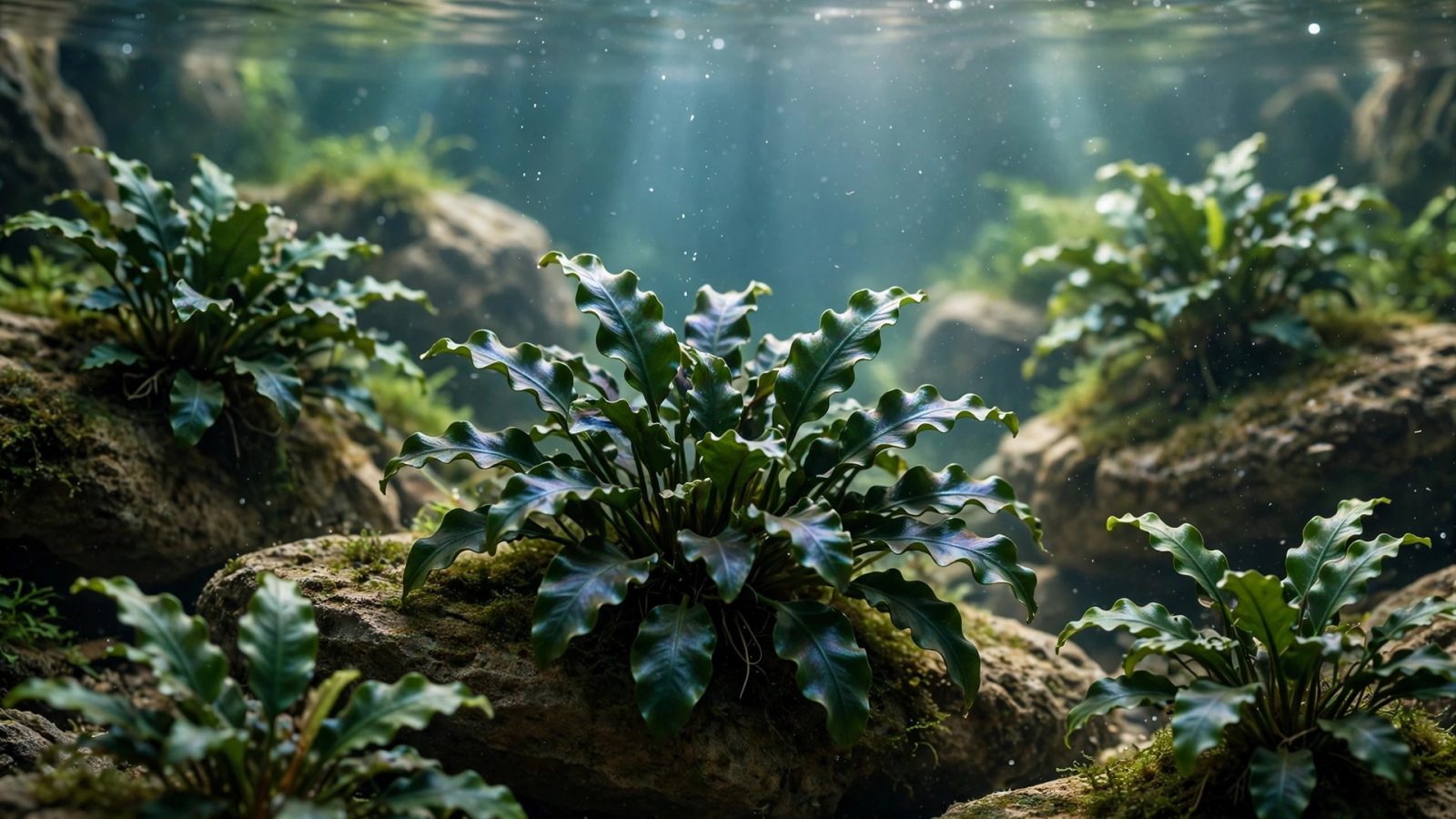
Bucephalandra care is for the keeper who has mastered the basics and wants something extraordinary. These Borneo-native epiphytes — “buce” to their devotees — produce some of the most beautiful leaves in the hobby: iridescent blues and purples, ruffled edges, dark speckling, colors that shift under different light. They are also slow, expensive, and unforgiving of algae — the orchids of the aquarium plant world.
This guide is honest about the trade-offs: what justifies buce’s premium price, how to keep it alive and algae-free, which varieties suit beginners, and why patience is not optional. If you are ready for a collector plant, start here.
Bucephalandra Care at a Glance
| Parameter | Recommendation |
|---|---|
| Scientific name | Bucephalandra spp. |
| Light | Low to medium (15–35 PAR); shade preferred |
| Temperature | 68–78°F (20–26°C); stable, not hot |
| pH | 6.0–7.0; soft, slightly acidic preferred |
| Water hardness | Soft to moderately hard |
| CO2 | Not required; stable conditions matter more |
| Fertilizer | Light liquid dosing; gentle, consistent |
| Growth rate | Very slow — new leaves monthly at best |
| Placement | Foreground to midground; attach to hardscape |
| Difficulty | Intermediate (easy care, hard patience) |
Why Bucephalandra Costs What It Costs
Buce’s price reflects biology and regulation. It grows extremely slowly — a rhizome extends millimeters per month — so commercial propagation is glacial. Wild collection in Borneo is restricted, and tissue-culture production, while growing, cannot yet meet demand for the rarer varieties. A small portion that costs as much as a full aquascape’s worth of stem plants is normal.
What you buy with that money: leaves with genuine iridescence (blues and purples visible under aquarium lighting), textures from smooth to heavily ruffled, and a plant that — once established — lives for years with minimal intervention. Whether that justifies the price is personal; go in with open eyes.
Planting: The Epiphyte Rules Apply
Bucephalandra is an epiphyte like anubias and java fern, and the same iron rule applies: never bury the rhizome. Attach to driftwood or rock with thread, glue, or wedging. The roots grip over several weeks; until then, secure attachment prevents the expensive portion from drifting into the filter intake.
Buce arrives in three forms:
- Submersed-grown portions: the safest buy. Already adapted, minimal melt risk. Worth the premium.
- Emersed/tissue-culture: cheaper, but expect a transition period as leaves adapt. Some melt is normal.
- Rhizome clumps on lava rock: common retail format. The rock can go straight into the scape.
Light: Less Is More
Buce wants low to medium light — 15–35 PAR — and genuinely prefers shade. This is counterintuitive for a premium plant, but high light is buce’s enemy: the ultra-slow-growing leaves become long-term algae farms under intense light, and the plant cannot outgrow the colonization the way fast stem plants do.
Place buce in the shadow of hardscape, under overhanging wood, or in the lee of taller plants. The iridescence shows best under moderate lighting anyway — blasting it washes out the subtle blues. If you run high light for a carpet, buce belongs in the shaded margins, not the blast zone. Its shade tolerance makes it perfect for the spots in low-light layouts where nothing else looks special.
Water Stability Over Perfection
Buce cares less about exact parameters than about stability. It prefers soft, slightly acidic water (pH 6.0–7.0) reminiscent of Borneo streams, and it dislikes heat — sustained temperatures above 78°F slow it further and encourage algae. But the real killer is fluctuation: CO2 swings, temperature swings, and major rescapes trigger melt in established buce colonies that had been thriving for months.
CO2 is not required. Many of the best buce displays are low-tech. If you run CO2, keep it consistent — an intermittent DIY setup is worse for buce than none at all. Gentle, stable, low-tech conditions grow the best bucephalandra.
Fertilizer: Gentle and Consistent
Light, regular liquid fertilizing suits buce’s slow metabolism — a fraction of what fast growers need. Heavy dosing in a slow-growing tank just feeds algae. A lean but consistent all-in-one dose, 1–2 times weekly, is plenty. Root tabs are irrelevant (epiphyte, not rooted). The goal is steady, minimal nutrition matching the plant’s unhurried pace.
The Algae Challenge
This is the heart of bucephalandra care. Each leaf persists for months, giving algae an eternity to colonize, and the plant grows too slowly to shed damaged leaves quickly. Prevention is everything:
- Shade the buce. The single highest-impact step.
- Keep the photoperiod at 6–7 hours if algae appears.
- Deploy a cleanup crew early: Amano shrimp and nerite snails graze buce leaves without damage. Otocinclus help too.
- Spot-treat with hydrogen peroxide (in a pipette, filters off, 1–2 ml per 10 gallons) for localized algae — it kills algae without harming the tough buce leaves when used carefully.
- Remove ruined leaves at the rhizome. A leaf more algae than plant is not recovering; the rhizome will replace it in time.
New buce keepers should read our brown-plants diagnosis to distinguish algae issues from true plant decline.
Growth, Patience, and Propagation
Set expectations honestly: a new buce portion may produce one leaf per month. A “filled in” buce-covered branch takes a year or more. This is normal. The plant is not struggling; it is just buce.
Propagation mirrors anubias: when the rhizome has grown long with multiple leaf clusters, cut it into sections with 4–5 leaves each and attach separately. Division every 12–18 months is typical. Never rush it — cutting a struggling rhizome invites rot. A healthy, established colony is the only propagation stock worth dividing.
Varieties for Beginners vs. Collectors
Start here (hardy, affordable):
- Bucephalandra ‘Wavy Green’ — the beginner buce. Tough, ruffled green leaves, reasonable price.
- Bucephalandra ‘Green Velvet’ — dark, velvety leaves. Forgiving and attractive.
- Bucephalandra ‘Kedagang’ — narrow, wavy leaves with reddish edges. A step up in looks without a step up in difficulty.
Collector tier (pricey, slower, fussier):
- Bucephalandra ‘Brownie Phantom’ — deep brown-purple iridescence. Stunning, slow, expensive.
- Bucephalandra ‘Godzilla’ — large, dramatic leaves. A centerpiece buce.
- Bucephalandra ‘Black Pearl’ / ‘Dark Achilles’ — near-black foliage. The collector’s grail tier.
Buy your first buce as an inexpensive variety. Learn its rhythms on a $15 portion, not a $150 one.
Common Bucephalandra Problems
Melting after introduction
Transition melt, especially with emersed stock. The rhizome usually survives — keep it attached and stable, and new submersed leaves emerge in weeks. Standard melt protocol applies.
Rhizome rot
Buried rhizome or physical damage. Trim to firm tissue, reattach with the rhizome fully exposed. Buce rhizomes are thinner than anubias and rot faster once started — act quickly.
Algae overwhelming the plant
Too much light, usually. Move to shade, reduce photoperiod, add shrimp, and remove the worst leaves. Recovery is slow but real.
No growth for months
Often normal — but verify the rhizome is firm and green-white, temperature is under 78°F, and the plant is not buried. Some buce sulks for months after introduction before resuming.
Leaves losing iridescence
Usually a light-angle phenomenon rather than a health issue — the blue sheen is structural and shows at certain angles. If color genuinely fades, check iron and overall nutrition.
Bucephalandra Tissue Culture: The Smart Buy
Tissue-culture buce — grown sterile in gel cups — is increasingly available and worth understanding:
- Pros: pest-free, algae-free, disease-free. Submersed-adapted from day one. Often cheaper per portion than potted.
- Cons: tiny portions that take longer to make visual impact. The transition from gel to tank still involves adjustment.
- Best practice: rinse gel thoroughly, divide into the smallest viable portions (3–4 leaves each), and attach across your hardscape. More planting points compensate for small size.
- Value calculation: a tissue-culture cup at the price of a potted portion typically yields 3–4x the planting points. For patient keepers, it is the best value in buce.
The Investment Perspective
Let us talk honestly about buce as a purchase. A collector-tier portion can cost $50–150 — serious money for a plant. Frameworks for thinking about it:
- Cost per year: a buce that lives five years (typical for established plants) at $80 costs $16/year — less than most keepers spend on fish food. Longevity transforms the economics.
- Propagation returns: a healthy colony doubles every 12–18 months. Your $80 portion becomes two $80 portions, then four. Patient collectors fund their hobby this way.
- Start cheap, upgrade deliberately: learn on ‘Wavy Green’ ($15), then buy one collector variety once you have kept buce alive for a year. The skills transfer completely.
- Never buy stressed premium buce: a melting ‘Brownie Phantom’ is not a bargain at any price. Buy premium varieties only as healthy, submersed-grown stock from reputable sellers.
Buce in Biotope and Natural Displays
Bucephalandra’s Borneo-stream origins inspire biotope keepers. A Southeast Asian stream tank — smooth river stones, driftwood, leaf litter, soft acidic water, hillstream loaches or small rasboras — with buce colonizing the hardscape is as close to nature as aquariums get. The plant’s slow growth suits the biotope philosophy: observe, do not intervene. These tanks age beautifully, with buce colonies becoming more impressive yearly while faster plants come and go.
Bucephalandra and Shrimp: A Perfect Pairing
Buce and shrimp are natural partners for several reasons:
- Biofilm factories: buce’s textured, long-lived leaves grow the biofilm shrimp graze constantly. A buce-covered branch is a 24-hour shrimp buffet.
- Gentle cleaning: shrimp (especially Amano and cherry) clean buce leaves of detritus and early algae without damaging the slow-growing foliage — the biological maintenance crew buce needs.
- Shared water preferences: both prefer stable, clean, slightly acidic water. A caridina shrimp tank’s parameters suit buce perfectly.
- Sh shelter for shrimplets: the dense leaf clusters shelter newborn shrimp from even peaceful fish.
- No conflict: shrimp do not eat healthy buce, uproot it, or disturb its slow growth. It is one of the few premium plants completely shrimp-safe.
A buce-and-shrimp nano tank (10–20 gallons) is among the most rewarding low-maintenance setups in the hobby — beautiful, stable, and largely self-managing once established.
Avoiding Common Buyer Mistakes
- Buying too little: a single tiny portion looks lost on hardscape. Budget for 3–5 portions minimum to create visual impact — or buy one and wait a year.
- Wrong placement: the most expensive mistake is planting premium buce in high light where algae destroys it. Shade first, always.
- Impatience with sellers: reputable buce sellers ship carefully and slowly. Rush shipping on a heat-sensitive plant kills more buce than any care mistake. Plan purchases for mild weather.
- Skipping quarantine: wild-collected buce can carry pests. A 2-week observation in a separate container protects your display tank’s investment.
- Overhandling: every time you move buce, you risk rhizome damage and melt. Plant it right the first time — the most expensive buce is the one you have to buy twice.
Bucephalandra FAQs
How long until my buce shows new growth?
Expect the first new leaf in three to six weeks, and a visibly fuller plant in three to six months. Buce grows on a seasonal timescale — checking daily will only frustrate you. Photograph it monthly instead; the comparison shots reveal progress your eyes miss day to day.
Tissue culture vs. potted buce — which should I buy?
Tissue culture cups are the smart buy for most keepers: pest-free, algae-free, and cheaper per plantlet, though the tiny plantlets need careful handling when planting out. Potted or rhizome-portion buce gives you an instant, display-ready clump at a premium price. Either way, quarantine and inspect — buce’s slow growth means any hitchhiking algae gets a long head start.
Why is my new buce melting?
Buce frequently sheds its old leaves when moved between different water — farm to shop to your tank is two transitions. The rhizome is the plant; as long as it stays firm and green, new leaves adapted to your water will follow. Do not move it again “to help” — stability is the cure, and every relocation restarts the melting clock.
Can bucephalandra grow emersed?
Yes, and many collectors grow rare varieties emersed in humid bins — it grows faster out of water and flowers readily. A sealed container with damp substrate and bright indirect light is all it takes, and it is the safest way to multiply expensive varieties without risking them in a tank.
The Bottom Line
Bucephalandra care is easy in technique and hard in temperament: attach the rhizome, shade it, feed lightly, keep everything stable, and wait. The plant does the rest on a timescale measured in seasons, not weeks. What you get for the money and patience is foliage no other aquarium plant can match — living metalwork in blue and bronze on your hardscape. Start with an affordable variety, learn its unhurried pace, and join the quiet ranks of keepers who check their buce every morning for that one new leaf. It is always worth the wait.